



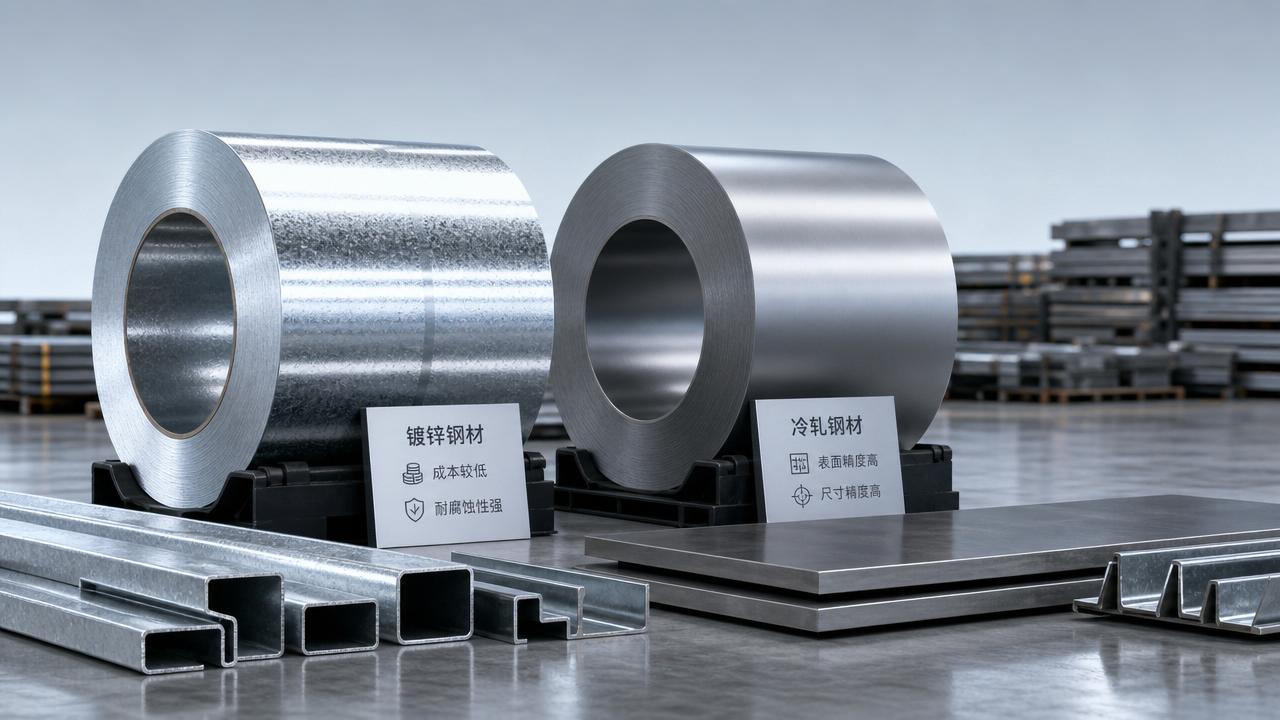
When comparing galvanized vs cold rolled steel cost, buyers often focus on unit price alone—but total spend depends on much more. For procurement teams, factors like corrosion resistance, finishing needs, service life, and maintenance can significantly affect long-term value. This article explores the real cost differences to help you choose the steel option that best fits your budget and application.
What really drives galvanized vs cold rolled steel cost in procurement?
For steel buyers, the first quote rarely tells the full story. Galvanized steel usually carries a higher initial price because it includes a zinc coating process, while cold rolled steel often looks cheaper at the purchase stage.
However, procurement decisions in the steel and sections industry should not stop at ex-works price. Surface treatment, fabrication loss, corrosion risk, coating life, and replacement intervals all change the final budget.
In many RFQ comparisons, buyers ask one simple question: which material lowers total spend over the project cycle? The answer depends on environment, finish expectations, downstream processing, and how the material will actually be used.
- If the part will face humidity, outdoor exposure, or chemical splash, corrosion resistance becomes a cost driver, not just a technical feature.
- If the application requires precise dimensions, smooth appearance, and tight forming tolerance, cold rolled steel may reduce secondary processing issues.
- If painting, powder coating, or post-fabrication plating is planned, buyers need to compare total finishing cost instead of raw substrate cost alone.
Basic difference between the two materials
Cold rolled steel is processed at room temperature to improve dimensional accuracy and surface finish. It is commonly selected for parts where appearance, flatness, or precision matters. On its own, it does not provide strong corrosion protection.
Galvanized steel is steel coated with zinc to resist rust. The base material may vary, but the practical buying point is clear: the coating adds cost upfront while helping reduce rust-related maintenance and premature replacement.
Direct price comparison: where does the extra cost come from?
Before choosing based on price alone, buyers should break down the cost structure behind galvanized vs cold rolled steel cost. The table below shows how the two options usually differ across common purchasing factors.
The key takeaway is that galvanized steel often costs more per ton or per sheet at the start, but cold rolled steel can become more expensive after coating, inspection, maintenance, or replacement is added to the budget.
Why quoted price and landed cost differ
Procurement teams should compare more than the base metal rate. Zinc coating weight, sheet thickness, tolerance requirement, order volume, and delivery route all influence actual landed cost.
For example, a low-priced cold rolled sheet may still require external galvanizing, painting, or protective packaging. That creates extra handling steps, additional suppliers, longer lead times, and more quality risks between processes.
Which option lowers total spend in different application scenarios?
The best answer to galvanized vs cold rolled steel cost depends on where and how the steel will be used. Procurement teams should match material choice to exposure conditions, service life target, and downstream manufacturing flow.
The table below helps buyers compare typical application scenarios rather than relying on a single price benchmark.
This comparison shows why the cheapest material on paper may not be the lowest-cost material in use. A procurement team buying for outdoor service often saves more with galvanized steel, while a buyer sourcing visible indoor parts may benefit from cold rolled steel.
Common purchasing logic by use condition
- Choose galvanized steel when corrosion exposure is predictable and maintenance access is limited.
- Choose cold rolled steel when tight tolerances, smooth finish, and secondary forming quality are more important than built-in rust protection.
- Run a full cost review when the part will be painted anyway, because the finishing route may change the cost balance.
What hidden costs do buyers often miss?
In steel procurement, hidden costs often cause more budget deviation than the quoted price difference between materials. This is especially true when evaluating galvanized vs cold rolled steel cost for multi-step manufacturing.
Secondary processing and finishing
Cold rolled steel may appear cost-efficient until additional rust-proofing is required. Painting, phosphating, electroplating, or powder coating can add material cost, labor, external subcontracting charges, and inspection steps.
Galvanized steel may reduce those steps, but buyers should also review whether the zinc layer affects welding, bending radius, or post-fabrication appearance requirements.
Scrap, rework, and quality disputes
A lower unit price loses value quickly if the material causes cracking during forming, poor coating adhesion, or rust during storage. Procurement cost includes rejected parts, schedule delays, replacement freight, and internal quality handling time.
Storage and transportation exposure
If your warehouse has high humidity or long inventory cycles, cold rolled steel may need stronger packaging and tighter stock rotation. Galvanized material generally tolerates temporary storage better, although proper handling is still necessary to avoid white rust or surface damage.
How should procurement teams evaluate galvanized vs cold rolled steel cost step by step?
A structured sourcing process helps buyers avoid decisions based on incomplete price comparisons. The goal is not simply to buy cheaper steel, but to buy the right steel at the lowest realistic total cost.
- Define the service environment clearly, including indoor or outdoor use, humidity level, chemical exposure, and required service life.
- Confirm the manufacturing route, such as stamping, bending, welding, painting, or direct installation without finishing.
- Request quotations with material specifications shown separately, including thickness, coating information, tolerance, and packaging terms.
- Calculate total cost by adding finishing, logistics, scrap risk, maintenance, and replacement assumptions.
- Review compliance needs, such as base material standards, coating expectations, and documentation required by your project or customer.
Practical supplier questions to ask
Strong procurement outcomes usually come from better technical questions. Buyers should not limit communication to price and lead time alone.
- What is the base steel grade and what tolerance range is available for thickness and flatness?
- For galvanized steel, what is the coating type and how is coating mass or thickness specified?
- For cold rolled steel, what surface condition is supplied and what additional protection is recommended before fabrication?
- Can the supplier support cut-to-length, slit coils, section processing, or custom packing to reduce handling loss?
Technical and compliance points that affect cost decisions
Procurement teams in the steel and sections sector often need technical clarity to prevent future disputes. Even when price is the priority, material standards and documentation remain important cost controls.
Depending on the market and application, buyers may reference common standards related to sheet steel, zinc-coated products, mechanical properties, dimensional tolerance, or test certificates. The exact standard will depend on project requirements and destination market.
If the supply chain involves export, fabricated assemblies, or regulated sectors, ask early about mill test certificates, coating-related data, packing method, and traceability. Missing documents can delay customs clearance, production release, or customer acceptance.
Quick selection guide for budget-sensitive buyers
If your main task is to control spend without increasing operational risk, the following matrix can simplify the selection process for galvanized vs cold rolled steel cost.
This guide is not a substitute for a project-specific review, but it helps buyers align material choice with the real commercial objective: lower overall spend, fewer surprises, and smoother delivery performance.
FAQ: common buyer questions about galvanized vs cold rolled steel cost
Is galvanized steel always more expensive than cold rolled steel?
On an initial purchase basis, galvanized steel is often priced higher because of the zinc coating process. But it is not always more expensive in total use. If your application would otherwise require painting or frequent corrosion maintenance, galvanized steel may lower the final project cost.
When is cold rolled steel the better purchasing choice?
Cold rolled steel is often the better choice for indoor parts, visible components, cabinets, appliances, and precision-formed items where a smooth surface and consistent thickness matter more than built-in corrosion protection. It also works well when your finishing process is already controlled internally.
What should buyers compare besides price per ton?
Compare coating requirement, fabrication method, expected service life, maintenance budget, packaging, scrap rate, storage conditions, and delivery lead time. These factors often change the real outcome more than a small difference in base price.
Can galvanized steel replace cold rolled steel in all cases?
No. Galvanized steel offers corrosion resistance, but it may not match every appearance, forming, or surface-finish requirement. For highly visible or precision-fabricated parts, cold rolled steel may remain the more practical choice, especially when additional finishing is already planned.
Why contact us for steel selection and quotation support?
If you are comparing galvanized vs cold rolled steel cost for a current RFQ, we can help you move beyond simple price checks. A better sourcing decision usually starts with clearer technical confirmation and a more accurate total-cost view.
You can contact us to discuss material thickness, surface condition, corrosion exposure, fabrication method, section or sheet format, and target delivery schedule. We can also support quotation alignment for custom cutting, packaging, sample review, and documentation expectations.
- Parameter confirmation for sheet, coil, and section steel requirements
- Material selection support based on application environment and budget target
- Lead time discussion for standard or customized supply arrangements
- Quote comparison support covering finishing, packing, and compliance documents
- Sample and specification review to reduce ordering risk before bulk purchase
For procurement teams under cost pressure, the right question is not simply whether galvanized or cold rolled steel is cheaper. The better question is which option reduces your total spend while meeting service, quality, and delivery requirements. Contact us with your drawings, application details, or target budget, and we can help you evaluate the most practical supply option.
By clicking 'Allow All', you agree to the storage of cookies on your device to enhance site navigation, analyze site usage and assist with our marketing efforts. Coo Cookie Notice