



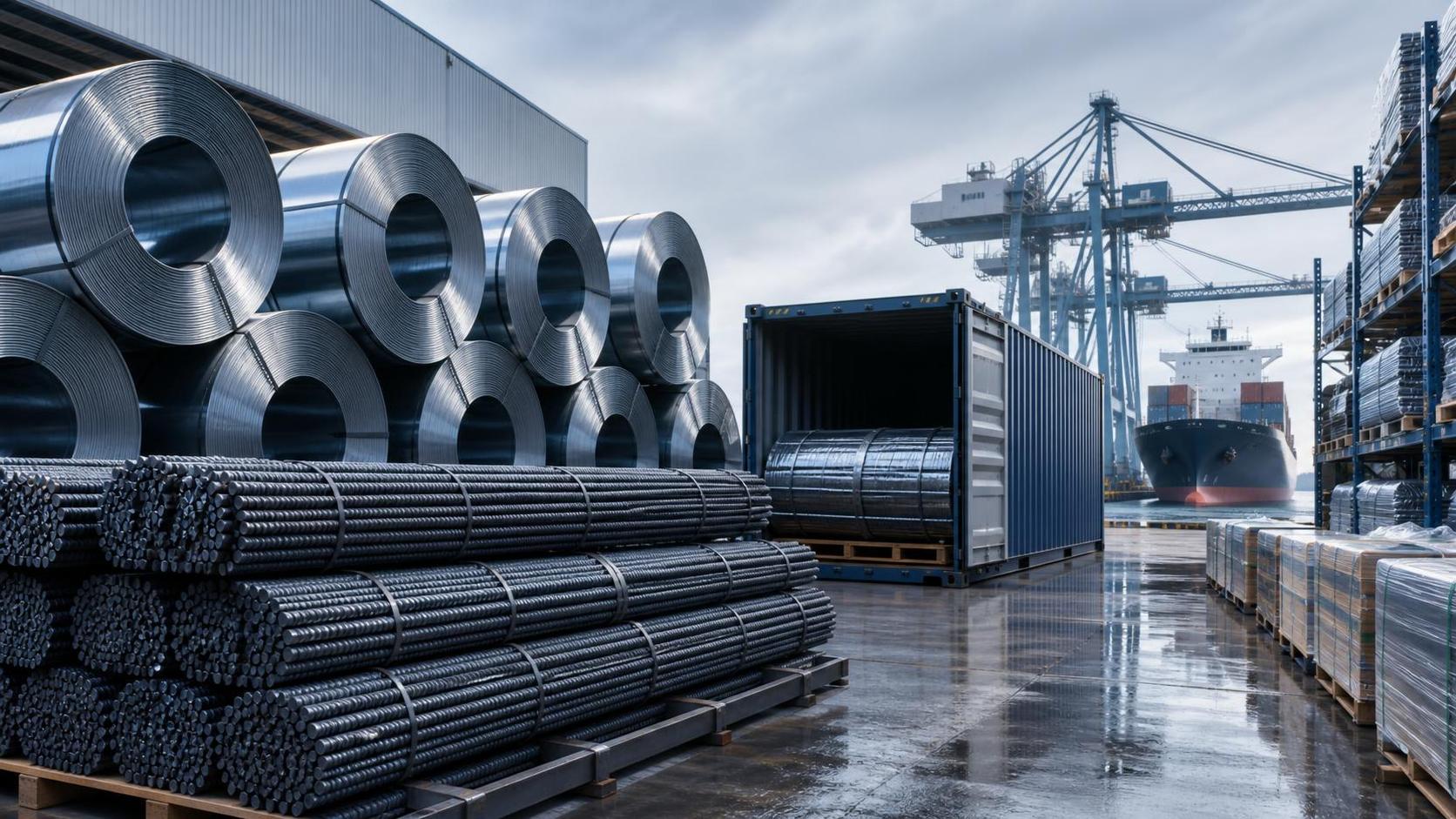
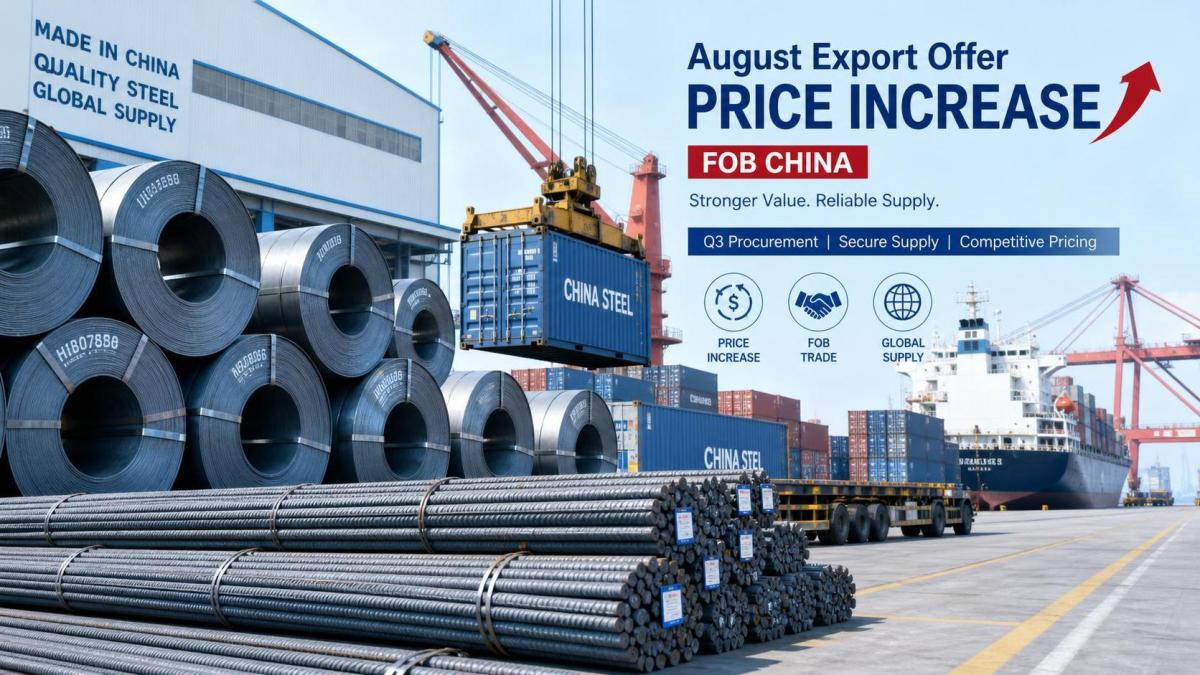
On August 10, 2026, several major Chinese steelmakers, including Baosteel, Shougang and Ansteel, raised ex-works prices by RMB 50 per ton for key export-oriented products such as hot-rolled coil and rebar, while Shagang kept construction steel prices unchanged. The adjustment has already fed through to FOB export offers, making this a relevant development for exporters, overseas buyers, processors and supply chain operators that are managing third-quarter procurement, pricing and landed-cost calculations.
What Changed in August Pricing
From August 10, 2026, major domestic steel producers in China moved up ex-works prices by RMB 50 per ton for main export steel products, including hot-rolled materials and rebar. The mills specifically referenced in the market update include Baosteel, Shougang and Ansteel.
In contrast, Shagang kept construction steel prices stable rather than joining the broader increase.
The factory price adjustment was directly reflected in FOB export quotations. At the same time, Tangshan steel billet ex-works prices continued to decline, reaching RMB 2,930 per ton on August 13, down RMB 10 week on week.
Where the Impact Will Be Felt First
Export trading desks face immediate quote revisions
From an industry perspective, export traders are among the first to feel the change because FOB offers move directly with mill pricing. The main impact is on quotation validity, margin management and the timing of order confirmation. What deserves closer attention is whether buyers accept revised offers quickly or delay commitments while comparing alternative sources.
Overseas buyers need to revisit Q3 landed-cost assumptions
Importers are affected because a higher FOB base can alter total procurement economics even when upstream cost signals are not moving in the same direction. The immediate business issue is not only headline price movement, but also whether third-quarter purchasing plans still fit internal budget and delivery expectations.
Processors and manufacturers must watch input-cost timing
Companies buying export-oriented steel for downstream processing may be affected through purchase timing and contract pricing discussions. Analysis shows that the combination of higher mill prices and softer billet pricing creates a less straightforward cost picture, which can complicate short-cycle sourcing decisions.
Supply chain service providers should track execution risk
For logistics, contract management and trade service providers, the pricing move matters because repricing often leads to renewed negotiation around shipment windows, document timing and execution terms. Observably, any gap between quoted price adjustments and customer acceptance can influence order flow and operating rhythm.
What Companies Should Watch Now
Differences between mill strategies
One practical point is the divergence between the broad RMB 50 per ton increase by major mills and Shagang's decision to keep construction steel prices steady. Companies should not treat the market as moving in one uniform direction across all products and suppliers.
Product categories under the closest pressure
Current attention should stay on the export products specifically mentioned in the update, especially hot-rolled materials and rebar. Businesses exposed to these categories need to review active quotations, pending negotiations and replacement-cost assumptions.
Procurement rhythm in the third quarter
Because the pricing move has already passed into FOB offers, procurement teams should reassess Q3 purchasing cadence rather than rely on earlier budgets or quote levels. This is particularly relevant where customer commitments depend on landed-cost accuracy.
Supplier and customer communication
In operational terms, companies should pay close attention to quote validity, contract confirmation, delivery timing and supporting trade documents. Clear communication with suppliers and customers becomes more important when pricing signals from mill offers and billet movement are not fully aligned.
Why This Looks More Like a Signal Than a Final Direction
Analysis shows that this development should not be read simply as a one-way pricing trend. On one side, mainstream mills have raised ex-works and export offer levels by RMB 50 per ton. On the other, Tangshan billet prices continued to edge lower, indicating pressure on the cost side and a split in pricing strategy.
It is more appropriate to understand this as a market signal that deserves continued observation rather than a settled direction. The key issue is the coexistence of firmer export quotations and weaker billet pricing, which suggests that pricing behavior and cost movement are not fully synchronized at this stage.
How to Read This Market Update
The immediate significance of this update lies in its effect on export pricing and procurement decisions, especially for third-quarter business. It does not by itself confirm a broad or lasting market shift, but it does highlight a more complicated pricing environment in which mills are adjusting offers even as some upstream cost indicators remain under pressure.
For industry participants, the most balanced reading is that this is a near-term pricing development with broader implications only if similar adjustments continue and are accepted across actual transactions.
Basis for This Article
This article is based on the user-provided news title, event date and event summary related to August 2026 pricing adjustments by major Chinese steel mills and the corresponding change in FOB export quotations.
For this type of industry update, relevant source categories typically include official mill notices, company announcements, industry association releases, authoritative media coverage and other market documentation commonly used in steel trade analysis. No specific official source link was provided in the input, so the underlying details still require ongoing verification.
Areas for continued monitoring include whether further mill pricing statements are issued, whether FOB offer adjustments are sustained in transactions, and how the divergence between export quotations and Tangshan billet pricing develops.
By clicking 'Allow All', you agree to the storage of cookies on your device to enhance site navigation, analyze site usage and assist with our marketing efforts. Coo Cookie Notice