



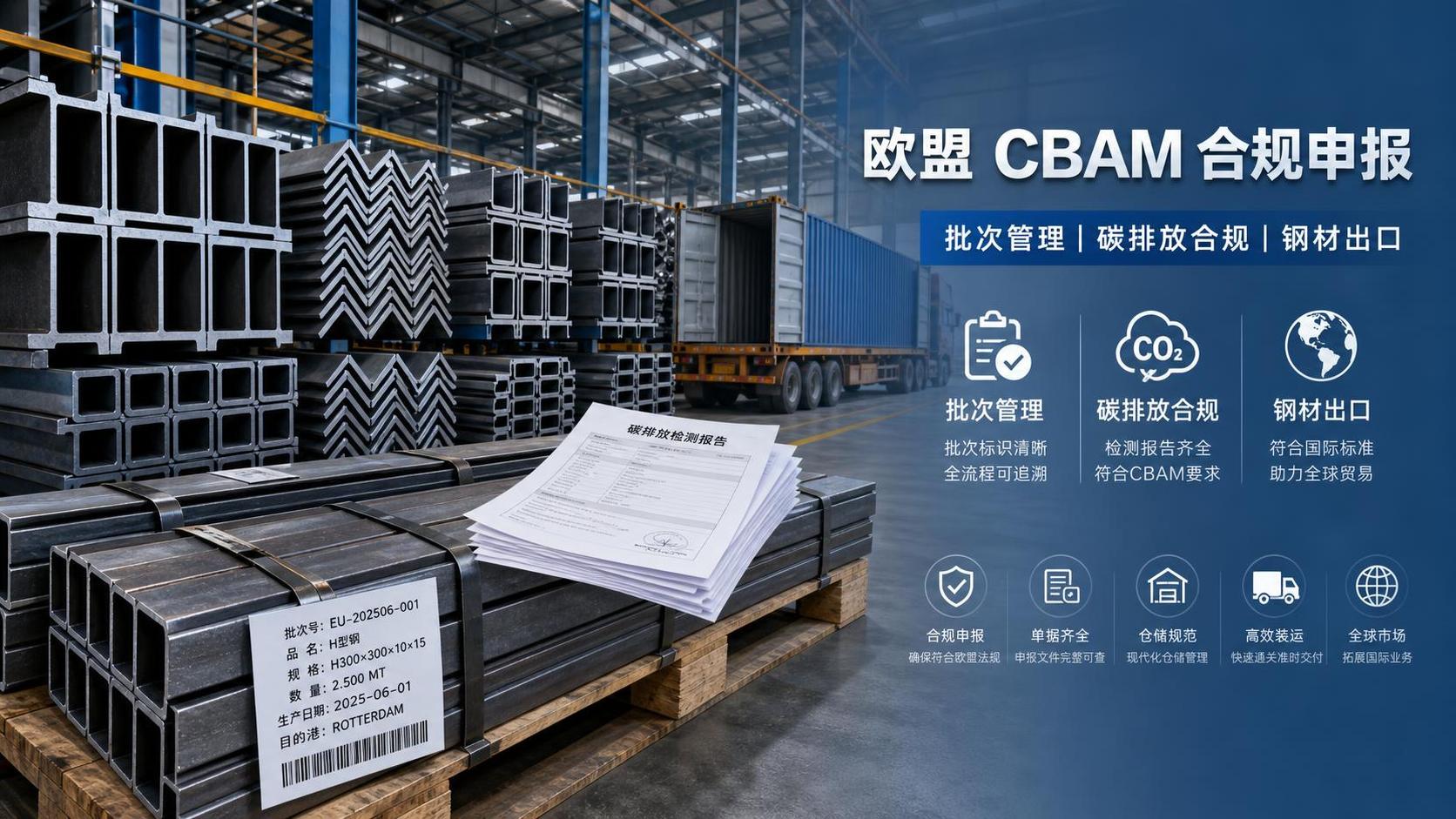
On July 25, 2026, the European Commission formally moved CBAM for steel products into its third phase, bringing major section categories including hot-rolled and cold-formed sections, H-beams, angles, and channels into the reporting scope. For exporters, the immediate issue is no longer general policy awareness but batch-level compliance: each shipment now requires verified embedded carbon emissions data submitted through the EU Transaction Portal. This matters directly to steel exporters, document teams, cost control staff, logistics coordinators, and EU-facing buyers because non-compliant declarations may lead to customs delays or rejection.
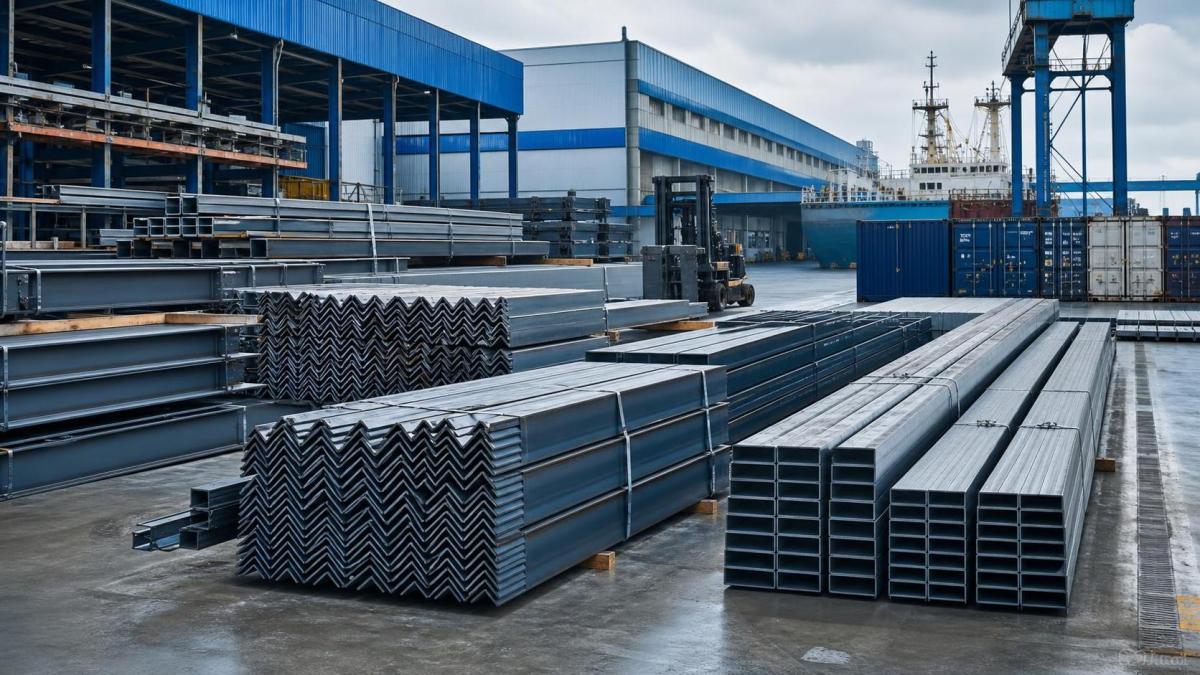
What Has Taken Effect From July 25
According to the provided information, CBAM entered Phase 3 on July 25, 2026 for steel products and now covers major section steel categories, including hot-rolled sections, cold-formed sections, H-beams, angles, and channels.
Exporters are required to submit the embedded carbon emissions of each batch in tCO2e/t through the EU Transaction Portal. The emissions data must be verified by a recognized third party.
The provided information also states that failure to make a compliant declaration may result in customs clearance delays or refusal of the shipment. The requirement directly affects document preparation, cost accounting, and delivery timing for Chinese steel exporters.
Where the Pressure Will Be Felt First
Export execution moves from product shipment to data-backed shipment
From an industry perspective, direct trading companies are likely to feel the change first because the new requirement sits at the point where goods, documents, and customs procedures meet. Their exposure is not only in filing the shipment, but in ensuring that every batch has verified embedded carbon data ready for submission before cargo movement reaches a critical stage.
Processing and manufacturing links face tighter upstream coordination
Analysis shows that processing and manufacturing businesses involved in section steel exports may be affected through the need to match physical product batches with compliant emissions records. The operational issue is not just production itself, but whether internal batch management and supporting documentation can align with third-party verification and portal submission requirements.
Supply chain service providers may see longer coordination cycles
Logistics operators, customs service providers, and other supply chain participants may also be affected because declaration readiness now becomes part of delivery planning. What deserves closer attention is that any gap between shipment scheduling and emissions document completion could extend lead times or create handover friction between exporter, verifier, and customs-related service teams.
EU-facing buyers and procurement teams will likely focus on delivery certainty
For buyers and procurement-side contacts linked to EU deliveries, the main concern is likely to be shipment reliability. Observably, when customs delay or refusal becomes a stated compliance risk, procurement discussions may shift toward whether suppliers can provide complete and verified carbon reporting materials on a batch basis, not only whether the material specification is available.
What Companies Should Review Now
Batch-level document readiness needs closer control
The practical issue is whether each shipment can be matched to a complete set of supporting materials for portal submission. Companies involved in exporting covered steel sections should pay close attention to how batch information, third-party verification results, and filing records are connected in day-to-day operations.
Cost accounting can no longer be separated from compliance timing
Analysis shows that the requirement affects more than reporting. Because embedded carbon data must be verified and submitted for each batch, cost accounting work may need to reflect the added compliance step and its timing impact. For exporters, this is especially relevant when confirming quotations, scheduling dispatch, and managing transaction margins.
Delivery commitments should be checked against filing timelines
What deserves closer attention is the distinction between having goods ready and having a compliant shipment ready. Businesses should review whether promised delivery dates, customs preparation windows, and customer communication processes properly account for the time needed to obtain recognized third-party verification and complete portal submission.
Customer communication may need to become more specific
For EU-bound business, supplier communication should focus on concrete compliance status rather than broad policy references. In practical terms, exporters may need clearer internal and external confirmation on whether a shipment falls within the covered categories, whether batch emissions data has been verified, and whether submission has been completed before customs-critical stages.
Why This Reads as More Than a Formality
As an editorial observation, this development is better understood as an operational compliance shift rather than a symbolic policy update. The reported requirement is specific, batch-based, and tied to customs consequences, which means the immediate impact is most visible in execution discipline rather than in abstract market sentiment.
It is more appropriate to understand this as both a near-term procedural change and a longer-term signal. The near-term change is clear: covered steel section exports now require verified embedded carbon reporting through the stated EU system. The longer-term signal, based only on the provided information, is that carbon data handling is becoming part of shipment readiness for affected products. Even so, further interpretation beyond that still requires continued observation.
How the Market Should Read This Stage
The main industry meaning of this update is that carbon reporting for covered steel sections has moved into a concrete execution stage tied to export clearance outcomes. For companies shipping to the EU, the issue is not simply whether CBAM exists, but whether internal documentation, verification, cost handling, and delivery planning are aligned with the new filing requirement.
A neutral reading is the most appropriate one here. This is not, based on the provided information, a complete conclusion about broader market outcomes, but it is a clear compliance development with direct operational implications. At this stage, the update is best understood as an actionable rule change that deserves close monitoring in day-to-day export management.
Basis of This Article
This article is based on the user-provided news title, event date, and event summary regarding the European Commission's formal implementation of CBAM Phase 3 for steel products on July 25, 2026 and the requirement for exporters to submit third-party-verified embedded carbon emissions data for covered steel sections.
For this type of development, commonly relevant source categories may include official announcements, company disclosures, industry association updates, authoritative media coverage, and standards-related documents. However, a specific official source link was not provided in the input, so the exact source document still requires ongoing verification.
Further attention should remain on any subsequent official wording, implementation details, and practical filing interpretation that may affect covered product categories, documentation workflows, and delivery execution.
By clicking 'Allow All', you agree to the storage of cookies on your device to enhance site navigation, analyze site usage and assist with our marketing efforts. Coo Cookie Notice