



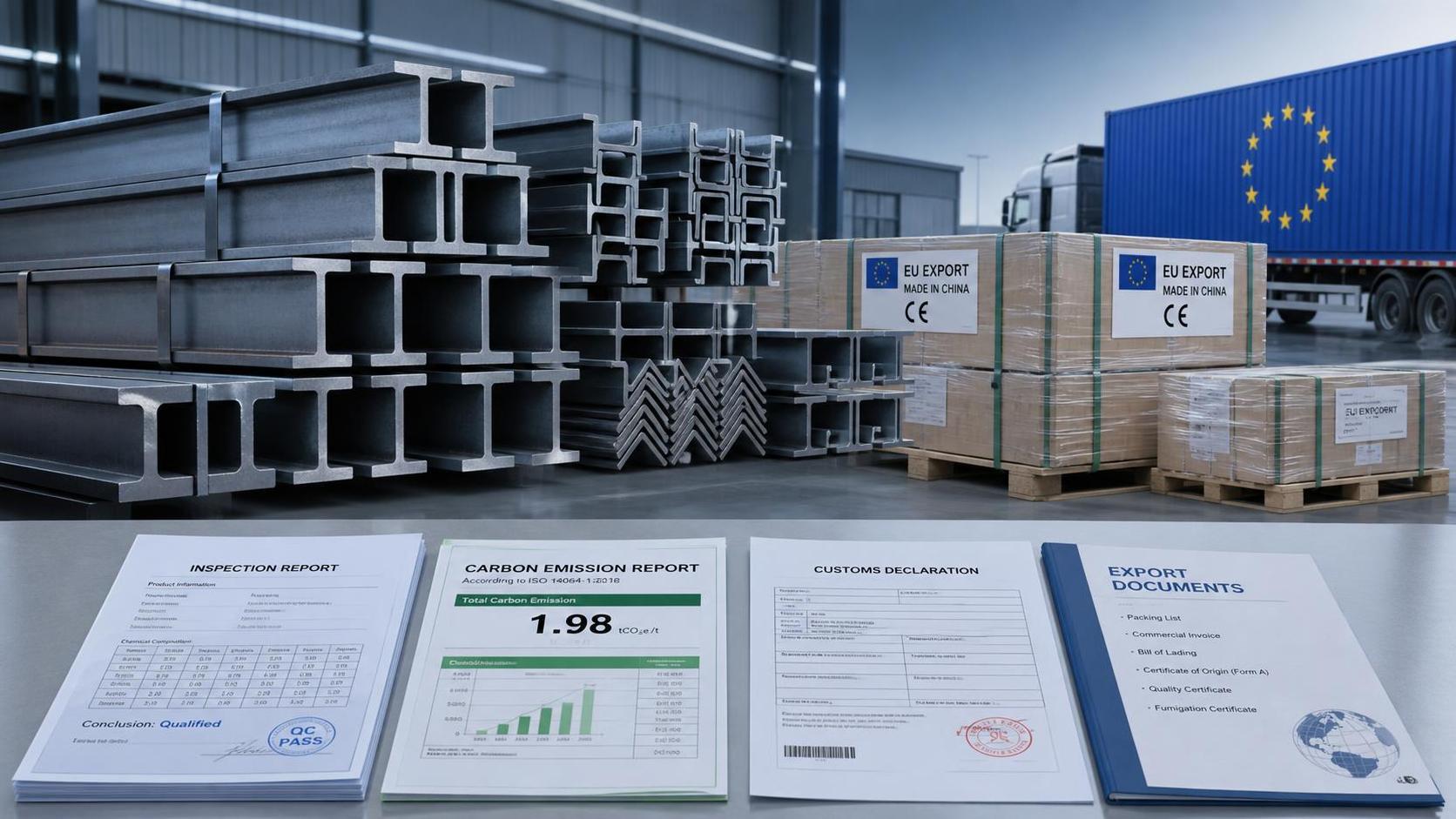
On August 4, 2026, the European Commission formally moved steel products into the third phase of CBAM for a broader set of profile-related imports, making embedded carbon disclosure a filing requirement rather than a side issue in documentation. For exporters, importers, processors, procurement teams, and compliance service providers involved in hot-rolled, cold-rolled, and structural steel shipments to the EU, this is worth close attention because the rule change connects customs clearance directly to verified product-level emissions data and therefore affects lead times, document readiness, and compliance cost control.
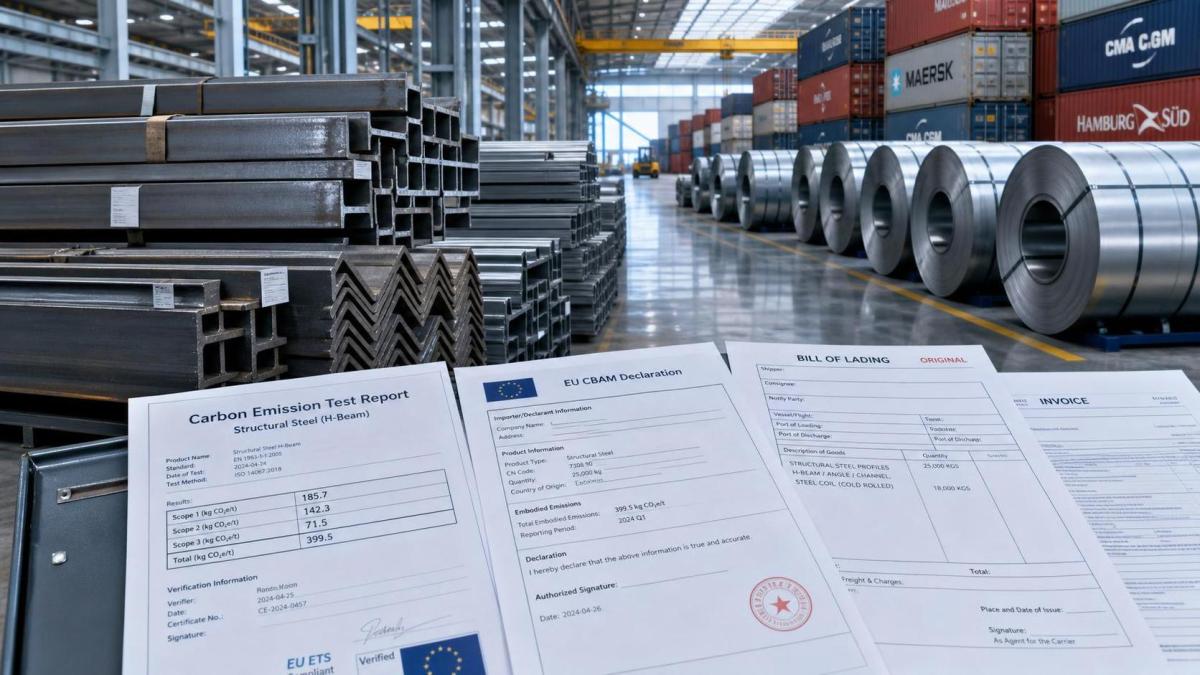
What the New Filing Requirement Covers
According to the provided event information, CBAM entered its third phase on August 4, 2026. The scope covers all hot-rolled, cold-rolled, and structural steel sections, including H-beams, angles, channels, and similar products. At the time of declaration, importers are required to submit unit embedded carbon emissions data expressed as tCO2e/tonne, and that data must be verified by a recognized verification body. The provided summary also states that failure to submit compliant information may lead to customs clearance delays or refusal of entry. It further confirms that the requirement directly affects delivery schedules to Europe, certification-related costs, and document preparation workflows for steel exporters worldwide.
Where the Pressure Will Be Felt Along the Supply Chain
Export transactions now depend more heavily on emissions documentation
From an industry perspective, exporters shipping covered steel products to the EU are likely to face the most immediate operational pressure because shipment release is tied to whether the importer can file verified embedded carbon data on time. The practical impact is likely to appear in pre-shipment coordination, document collection, and handover timing between seller and buyer. What deserves closer attention is whether trade teams are treating emissions verification documents with the same urgency as core shipping paperwork, since a missing or unusable file can affect the customs stage rather than only internal compliance review.
Import and procurement teams will need tighter document control
For import-side commercial and procurement teams, the rule change matters because product ordering, supplier selection, and declaration readiness become more closely linked. Analysis shows that buyers of hot-rolled, cold-rolled, and structural sections may need to pay closer attention to whether suppliers can provide verified unit emissions data in the required form and on the required timeline. The pressure point is not only price or availability, but whether the supplier package can support an on-time declaration without adding avoidable clearance risk.
Processors and manufacturers may face new handoff requirements
Manufacturing and processing businesses using covered steel products in cross-border supply arrangements may also be affected where product specifications, order fulfillment, or export packaging rely on upstream steel sourcing. Observably, the main exposure here is at the interface between material sourcing, technical documentation, and delivery scheduling. If a shipment includes covered structural sections, teams may need to confirm earlier in the process whether the relevant embedded carbon data has been verified and can travel with the trade documentation set.
Verification and compliance support functions gain a more operational role
Certification-related firms, verification support providers, and internal compliance teams are also drawn closer to the transaction timetable under this change. The requirement is not presented as a background reporting exercise; it sits inside the declaration process. Analysis shows that this can raise the importance of review timing, file consistency, and acceptance of verification outputs by the relevant parties involved in customs filing and trade execution.
What Companies Should Check Now in Practice
Align emissions records with declaration timing
Companies involved in EU-bound steel shipments should pay close attention to whether embedded carbon data for covered products can be prepared, verified, and transferred in step with declaration deadlines. The provided information does not set out detailed filing procedures, so it would be premature to assume a uniform operating pattern. Even so, the immediate practical issue is timing: if verification is completed too late, logistics and customs processes may still be disrupted.
Review supplier readiness for covered steel categories
What deserves closer attention is whether suppliers of hot-rolled, cold-rolled, and structural steel sections can provide product-level embedded carbon data that has been validated by a recognized verification body. For procurement and sourcing teams, this is less a broad sustainability discussion than a document-readiness issue tied to shipment execution. Supplier qualification conversations may therefore need to cover verification capability, document completeness, and responsiveness during order fulfillment.
Recheck document packages used for EU delivery
Exporters and importers should also review whether their existing trade document workflows are built to carry verified emissions information alongside other shipment materials. Analysis shows that the operational risk may emerge from fragmented responsibilities: sales teams, logistics coordinators, customs agents, and compliance reviewers may each hold part of the information, while the declaration requirement demands a usable final package at filing stage.
Monitor how the rule is applied in transaction practice
The provided summary confirms the compliance consequence of delay or refusal of entry for non-compliant submission, but it does not provide further detail on implementation nuances. It is more appropriate to understand this as a rule that has already moved into an actionable stage, while practical interpretation and transaction-level handling still merit close monitoring. Companies should therefore keep watching for later clarifications in filing language, verification acceptance, commercial document wording, and counterpart expectations.
Why This Looks Like an Execution Signal, Not Just Another Policy Update
Analysis shows that this development is more than a general policy reminder because it links customs treatment to verified unit embedded carbon emissions data for specific steel product categories. That makes the change relevant to people managing shipment release, procurement planning, and supplier documentation, not only to policy or sustainability specialists. At the same time, the input information does not provide full procedural detail, so the market should avoid over-reading any single operational outcome. It is more appropriate to understand this as a clear execution signal with further implementation practice still worth observing.
How the Market May Need to Read This Stage
In practical terms, this event signals that CBAM compliance for covered steel sections has moved further into routine trade execution. The significance lies in the fact that verified embedded carbon data now sits closer to the point of customs filing and delivery performance. A balanced reading is that the change is already material for affected transactions, while the precise operating rhythm across documentation, verification, procurement, and shipment coordination still requires continued observation as market participants adapt.
Basis of This Article and What Still Needs Verification
This article is based on the user-provided news title, event date, and event summary. For events of this type, relevant source categories typically include official announcements, releases from regulatory authorities, customs or trade administration notices, industry association updates, standards-related documents, and reporting by established trade or business media. A specific official source link was not provided in the input, so the exact official reference still needs to be verified on an ongoing basis. Further monitoring is also warranted for implementation detail, verification practice, filing interpretation, tender or contract document changes, industry feedback, and how affected companies are handling compliance in actual transactions.
By clicking 'Allow All', you agree to the storage of cookies on your device to enhance site navigation, analyze site usage and assist with our marketing efforts. Coo Cookie Notice