




On August 1, 2026, the European Union moved CBAM for steel products into its second implementation stage, extending the requirement to imported hot-rolled, cold-formed, and welded sections. For import declarations, importers must now submit a report on embedded carbon emission intensity verified by a recognized third party. This matters not only as a customs filing change, but as a practical compliance issue for exporters, distributors, and supply chain teams handling steel deliveries into the EU, especially where documentation readiness and carbon accounting capacity are uneven across suppliers.
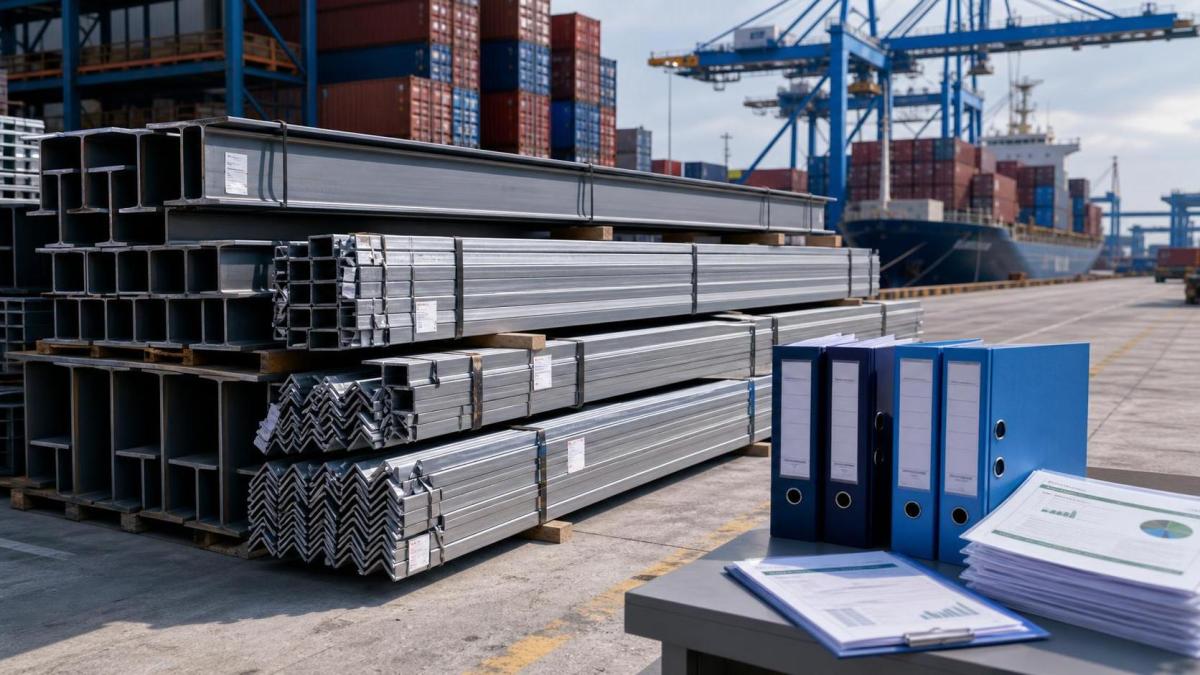
What the new filing requirement now covers
According to the provided event summary, from August 1, 2026, CBAM entered its second implementation phase for steel products in the EU. The scope covers all imported hot-rolled, cold-formed, and welded sections. Importers are required to submit, together with the declaration, a report on embedded carbon emission intensity that has been verified by a recognized third party. If the required submission is not completed in compliance with the rule, customs clearance may be delayed or entry may be refused. The provided information also states that this requirement directly affects the supply rhythm and document preparation process for Chinese steel exporters supplying EU distributors, and creates a compliance threshold for small and medium-sized suppliers that do not have LCA capability.
Where the pressure is likely to appear first in the supply chain
Export shipments face a document-led bottleneck
From an industry perspective, exporters supplying steel sections into EU distribution channels are likely to feel the change first in shipment preparation rather than only in product sales. The immediate pressure point is whether the carbon data package can be assembled in time and in a form that supports the importer’s declaration. What deserves closer attention is the link between customs timing and document completeness: once third-party-verified embedded emissions data becomes part of the filing workflow, late or incomplete paperwork can affect delivery sequencing and dispatch planning.
EU distributors and importers carry front-end compliance exposure
Analysis shows that distributors and importers are likely to tighten supplier onboarding and pre-shipment review, because the declaration obligation now depends on verified emissions information being available at the time of import. In practical terms, purchasing and trade teams may need to check not only product specifications and commercial documents, but also whether a supplier can support the required emissions reporting package. This shifts part of the compliance burden upstream into supplier coordination.
Smaller suppliers may encounter a capability gap
Observably, the rule is particularly significant for small and medium-sized suppliers without LCA capability. The issue is not only whether they can produce goods to specification, but whether they can support the documentation chain needed for import. For these suppliers, the new requirement may function as a market-access barrier at the documentation and verification stage, even before pricing or delivery terms become the main commercial issue.
Service providers around testing and verification may become more involved
From an industry perspective, the requirement for recognized third-party verification means carbon-related documentation is no longer only an internal reporting matter. Companies involved in compliance review, technical file preparation, and related verification support may become more closely tied to shipment readiness. The provided information does not specify execution details, so this should be understood as an operational observation rather than a confirmed market outcome.
What companies should watch in current execution
Whether existing document workflows are sufficient
Analysis shows that companies should first examine whether their current export document process can absorb a verified embedded emissions report without delaying declarations. The key issue is not broad sustainability positioning, but whether trade, technical, and logistics teams can align document timing with customs submission requirements.
Which suppliers can actually support the filing package
What deserves closer attention is supplier qualification at the documentation level. Buyers, exporters, and distributors may need to distinguish between suppliers that can provide verifiable carbon data and those that cannot. For businesses relying on smaller mills or processors, this may affect supplier selection, order timing, and contingency planning for EU-bound deliveries.
How delivery schedules may need more lead time
Observably, the rule may affect delivery planning because the consequence of non-compliant submission is not abstract regulatory risk but possible clearance delay or refusal of entry. Companies should therefore watch whether order confirmation, production release, and shipping windows need to be adjusted to reflect the added verification step. The provided information does not confirm a uniform market practice, so this remains an execution point to monitor.
How contract and technical files are being updated
From an industry perspective, businesses involved in EU supply should also pay attention to whether trade documents, technical files, and procurement requirements are being revised to reflect the new submission expectation. This is especially relevant where responsibility for preparing emissions-related documents has not been clearly assigned between supplier, exporter, and importer.
Why this looks more like an execution signal than a distant policy discussion
Analysis shows that this development is better understood as a live compliance signal rather than a general policy headline. The reason is straightforward: the requirement is tied to import declaration practice, includes third-party verification, and carries a stated customs consequence for non-compliance. At the same time, observably, the event summary does not provide detailed guidance on implementation pathways, review standards, or market-wide adjustment patterns. That means the industry has a confirmed rule change to respond to, while still needing to monitor how consistently the requirement is interpreted and applied in day-to-day trade execution.
How the industry should read the change for now
At this stage, it is more appropriate to understand the start of CBAM phase two for steel sections as a concrete compliance development with direct operational implications for EU-bound trade. The most immediate significance lies in documentation readiness, third-party-verified embedded carbon reporting, and the resulting effect on customs timing and delivery coordination. The broader commercial impact will still need to be judged through subsequent execution, supplier adaptation, and market feedback rather than assumed in advance.
Basis of this article and points still requiring verification
This article is based on the user-provided news title, event date, and event summary. For developments of this kind, relevant source categories typically include official announcements, releases from regulatory authorities, customs or trade administration information, industry association updates, standards-related documents, and reporting by authoritative media. A specific official source link was not provided in the input, so the underlying official publication and any later clarifications still need to be verified on an ongoing basis. Further observation is also needed on implementation details, verification interpretation, procurement document changes, tender document updates, industry feedback, and how companies are handling execution in practice.
By clicking 'Allow All', you agree to the storage of cookies on your device to enhance site navigation, analyze site usage and assist with our marketing efforts. Coo Cookie Notice