



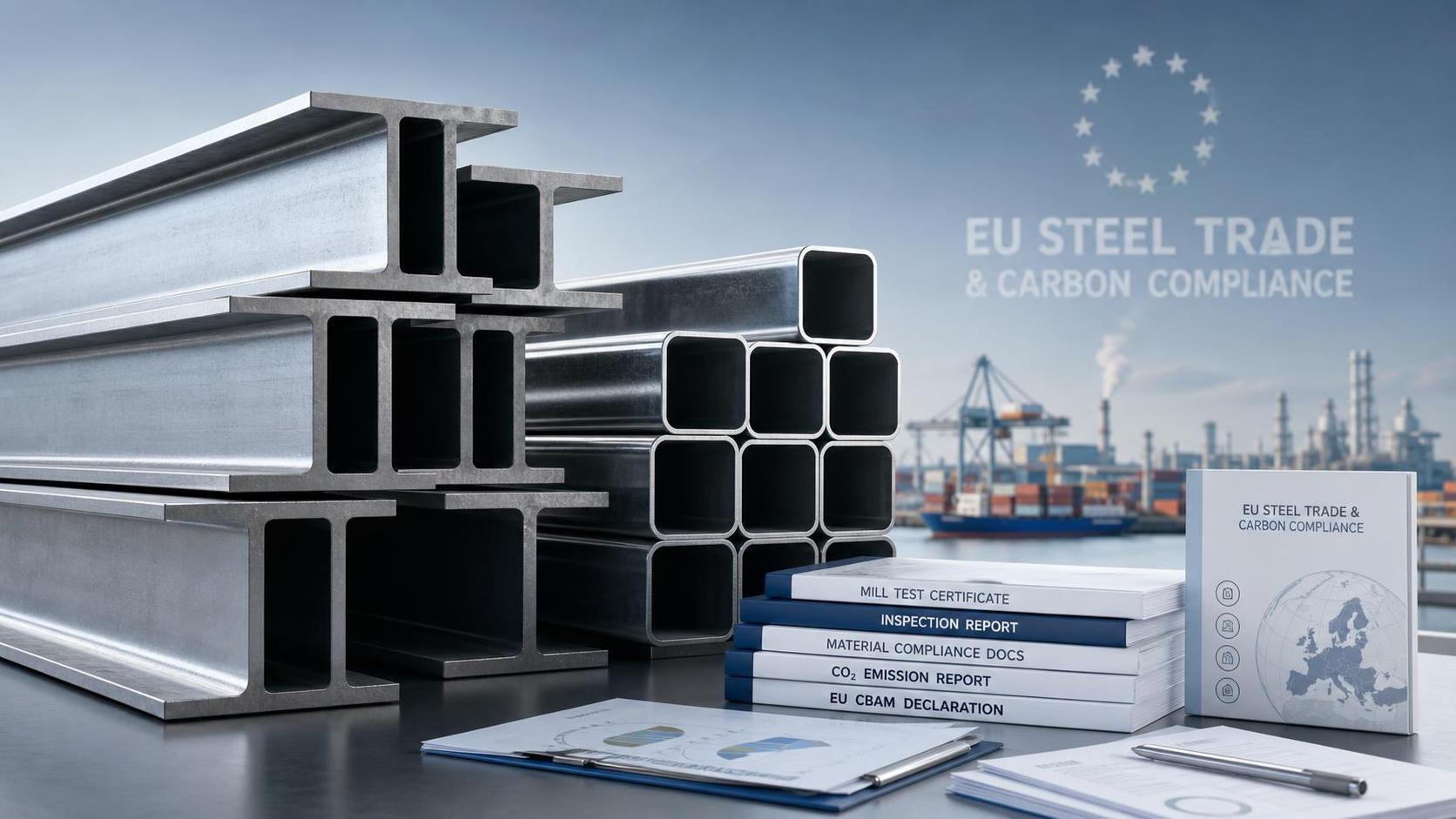
On August 1, 2026, the EU moved its CBAM transition rules for steel into a more detailed compliance stage for imported structural sections. Based on the European Commission’s July 29 release of the third version of the transitional implementing rules, exporters, distributors, importers, and customs-related service providers now need to pay closer attention to how embedded carbon data is reported for products such as hot-rolled H-beams and cold-formed rectangular tubes, because the change links product classification, emissions reporting, third-party verification, and customs timing more directly than before.
What the new CBAM implementation rules now require
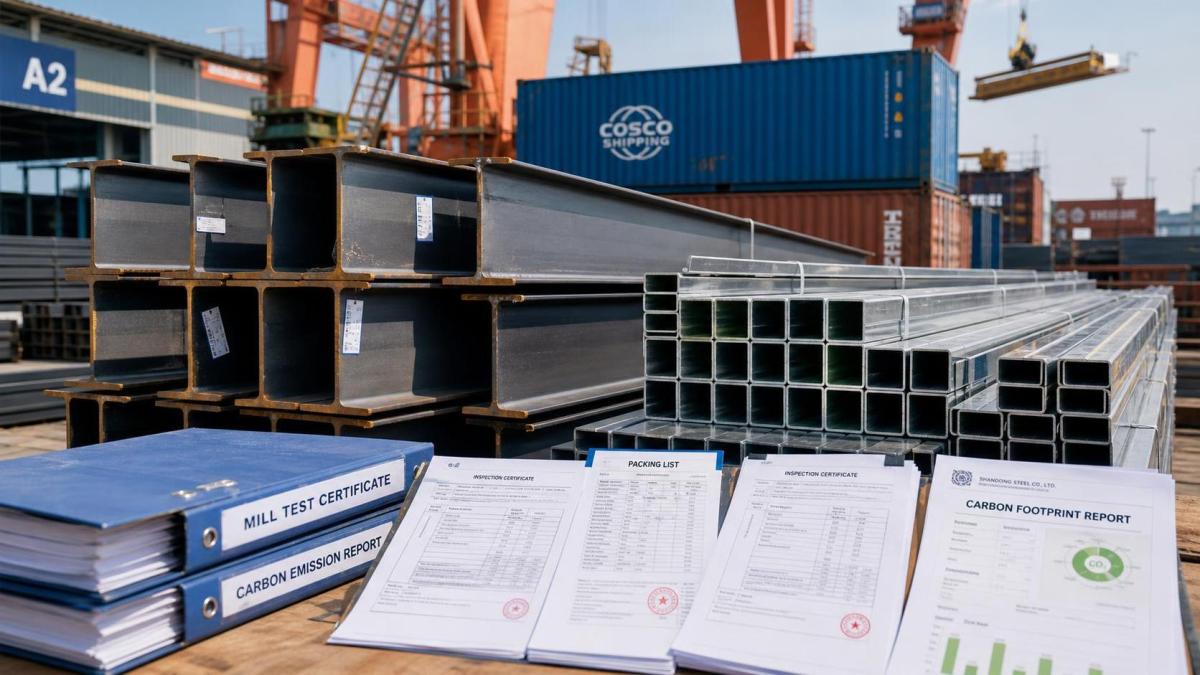
The European Commission issued the third version of the CBAM transitional implementing rules on July 29, 2026. The rules clarify that from August 1, 2026, all structural sections shipped to the EU, including hot-rolled H-shaped steel and cold-formed rectangular tubes, must submit quarterly embedded carbon emissions data through the CBAM system together with third-party verification reports.
The update also refines product coverage by breaking structural sections down to specific standard levels, including EN 10025-2 and EN 10219. In addition, Chinese exporters are required to provide proof of the carbon intensity of upstream iron ore procurement.
According to the information provided, this change directly affects customs clearance timing and compliance costs for distributors operating in Europe and the United States.
Where the immediate pressure is likely to appear
Export transactions face a tighter documentation threshold
From an industry perspective, exporters of steel sections to the EU may feel the impact first because the rule change ties quarterly emissions reporting to third-party verification and more product-specific classification. The practical pressure point is not only whether goods are shipped, but whether the supporting carbon documentation can match the declared product standard and reporting cycle.
Upstream sourcing records become more relevant
Analysis shows that the requirement for Chinese exporters to provide evidence on the carbon intensity of upstream iron ore procurement may push attention further back into the supply chain. For companies buying raw materials, the issue is likely to center on whether procurement records and related carbon information can be obtained in a form that is usable for CBAM reporting rather than only for internal purchasing purposes.
Distributors and import-side operators may see customs friction
What deserves closer attention is the import and distribution side. The information provided states that customs clearance timing and compliance costs for European and US distributors are directly affected. In operational terms, this suggests closer scrutiny of document readiness, filing accuracy, and coordination between exporter, importer, and customs-facing teams.
Service providers may need to handle more verification-driven workflows
For logistics, customs, and compliance service providers, the change may translate into more work around document collection, submission timing, and cross-checking between product standards and emissions files. The main issue is likely to be coordination quality, because a reporting obligation is now tied more explicitly to product detail and third-party verification.
Practical points companies should watch now
Focus on whether product coding and standard references are aligned
Because the new rules break structural products down to specific standards such as EN 10025-2 and EN 10219, companies should closely review whether internal product descriptions, customer-facing specifications, and CBAM-related reporting language are consistent. A mismatch here could create avoidable compliance friction.
Prepare for the reporting burden behind quarterly submissions
Observably, the requirement is not limited to a one-time filing. Quarterly embedded carbon reporting means companies involved in repeated EU shipments should pay attention to reporting cadence, document completeness, and the availability of third-party verification within the shipment and delivery cycle.
Do not treat upstream carbon proof as a secondary appendix
The requirement for proof related to iron ore procurement carbon intensity suggests that upstream evidence may become a core compliance document rather than a supplementary note. Companies trading from China into the EU should therefore pay attention to whether suppliers can provide usable and consistent support materials in time for reporting and customer review.
Separate the policy signal from day-to-day execution risk
It is more appropriate to understand this as both a regulatory clarification and an operational test. The rule text points to what is required, but the business impact will depend on whether exporters, importers, and channel partners can translate those requirements into workable document flows, verification routines, and customer communication.
Why this reads as more than a routine reporting update
Analysis shows that this development is notable not because it introduces a broad new concept, but because it applies CBAM reporting to imported steel sections with more product-level specificity and more upstream traceability. The addition of standard-level differentiation and iron ore carbon-intensity proof indicates a tighter link between product identity and emissions evidence.
At the same time, it would be premature to treat the announcement alone as a final measure of commercial impact across the whole market. What can be said from the information provided is that the rule raises the compliance threshold for affected shipments and creates more immediate execution pressure for companies involved in EU-bound structural steel trade.
How this update is best understood at this stage
For the industry, the current significance of this update lies in its movement from general CBAM compliance expectations toward more detailed filing and verification requirements for specific steel section categories. The near-term issue is operational readiness: classification accuracy, reporting discipline, upstream documentation, and customs coordination.
On balance, this is better understood as an immediate compliance change with longer-term signaling value. It already affects how affected products are prepared for EU entry from August 1, 2026, while also indicating that carbon documentation in steel trade may continue to become more granular and more supply-chain dependent.
Basis of this article and points for continued verification
This article is based on the user-provided news title, event date, and event summary. For this type of development, relevant source categories typically include official announcements, company disclosures, industry association updates, authoritative media reporting, and standard organization documents.
A specific official source link was not provided in the input, so the exact publication text and any subsequent clarifications still require continued verification. Follow-up attention should be given to any further official wording, implementation updates in the CBAM system, and any additional clarification on documentation expectations for covered steel section standards and upstream carbon-intensity proof.
By clicking 'Allow All', you agree to the storage of cookies on your device to enhance site navigation, analyze site usage and assist with our marketing efforts. Coo Cookie Notice