




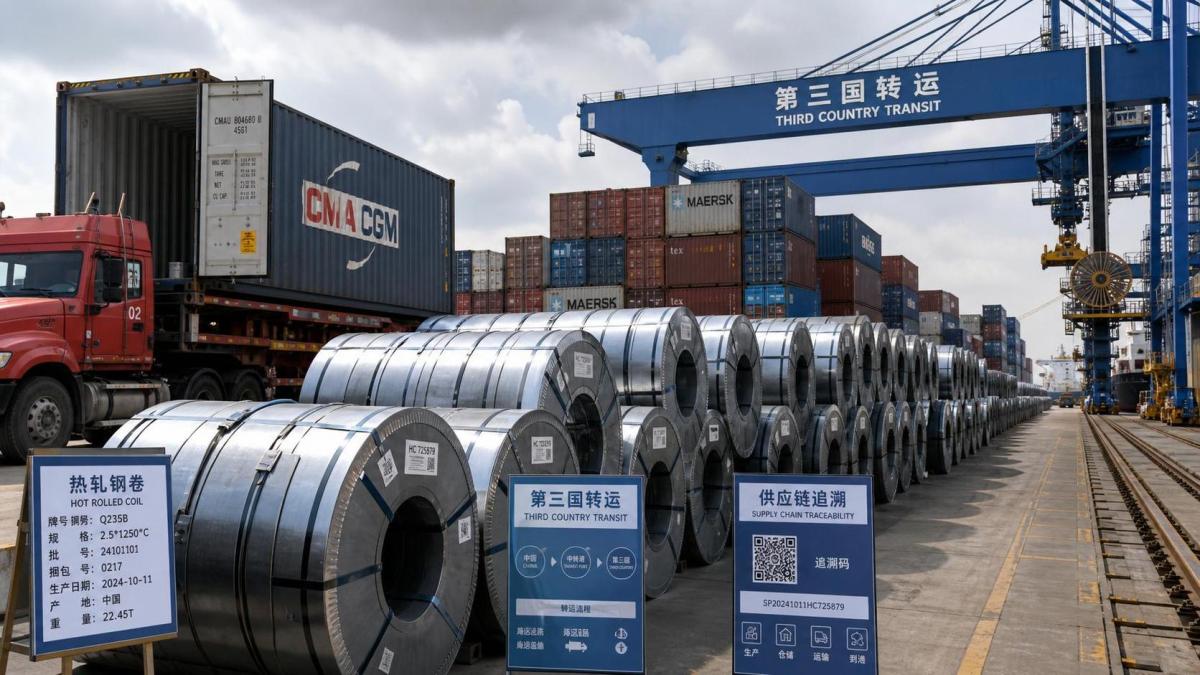
On July 14, 2026, the U.S. Department of Commerce opened a circumvention investigation involving hot-rolled steel coil from China under HS 7208/7209, with attention on goods routed through third countries such as Vietnam, Malaysia, and Mexico after relabeling or simple processing before export to the United States. For importers, distributors, and buyers operating regional warehousing and delivery models, this development deserves close attention because it raises immediate questions around customs compliance, supply chain traceability, and how procurement contracts allocate trade-risk exposure.
What the case formally covers
According to the information provided, the case was formally initiated by the U.S. Department of Commerce on July 14, 2026. The investigation concerns hot-rolled steel coil produced in China and identified under HS 7208/7209.
The stated focus is on exports that pass through third countries, including Vietnam, Malaysia, and Mexico, where the goods may be relabeled or undergo simple processing before being shipped to the U.S. market. The information provided also indicates that the case is expected to affect customs clearance compliance for overseas importers, traceability requirements across supply chains, and the design of risk clauses in procurement contracts.
Where the pressure is likely to surface first
Import clearance and trading flows
From an industry perspective, direct trading companies and overseas importers may face the earliest operational impact because the investigation specifically points to routing and handling through third countries. The main pressure is likely to center on import declarations, origin-related documentation, and consistency between shipping records, supplier information, and product handling history.
Regional distribution and warehouse-based buyers
Analysis shows that distributors and buyers using regional warehousing and fulfillment models may be more exposed than businesses with simpler point-to-point transactions. The reason is practical: these models often involve multiple transfer points, layered documentation, and a broader set of counterparties, making traceability and record alignment more demanding.
Procurement and contract management
For procurement teams and commercial managers, the effect may appear through contract structure rather than only through physical cargo movement. What deserves closer attention is how sourcing agreements define supplier representations, documentation responsibilities, delivery contingencies, and liability allocation if a shipment becomes subject to compliance review.
Supply chain service providers
Service providers involved in logistics coordination, customs support, and document handling may also need to track this development closely. Observably, their role becomes more sensitive when authorities are examining whether relabeling or simple processing in third countries changes how a shipment is treated for compliance purposes.
What companies should watch now
Monitor official wording and scope development
Analysis shows that the current case should be followed through its official language and any later clarifications. At this stage, the most practical concern is not broad speculation but whether subsequent statements change the treatment of covered products, routing patterns, or documentation expectations.
Review traceability at shipment level
Businesses dealing in the affected HS categories should look closely at whether shipment records can clearly show product origin, processing steps, relabeling history if any, and transfer paths across intermediaries. This is particularly relevant where goods move through Vietnam, Malaysia, Mexico, or similar third-country structures.
Recheck supplier documents and commercial commitments
What deserves closer attention is whether supplier files, certificates, commercial invoices, packing records, and transaction descriptions are consistent enough to support compliance review. In parallel, companies may need to revisit contract language on warranties, indemnities, document delivery timing, and response obligations if customs or trade scrutiny intensifies.
Prepare customer communication and contingency handling
For distributors and regional inventory operators, the practical issue may extend beyond sourcing to customer-facing execution. Analysis shows that delivery scheduling, replacement sourcing, and explanations to downstream buyers can become sensitive if a shipment encounters additional review or document requests.
Why this reads as a compliance signal, not a final outcome
Observably, this development is most appropriately understood as an active regulatory signal rather than a completed trade outcome. The confirmed fact is the launch of an anti-circumvention investigation; it does not by itself establish a final determination in the information provided.
From an industry perspective, the significance lies in where the authorities are looking: third-country routing, relabeling, and simple processing. That focus matters because it shifts attention from product category alone to transaction structure, document integrity, and the commercial logic behind cross-border handling. For companies in the steel trade, this is less a headline about volume and more a warning about evidentiary readiness.
How the market may best interpret this stage
At the current stage, it is more appropriate to understand this news as a development that can affect operating discipline faster than it changes market structure. The immediate relevance is strongest for import compliance, supplier due diligence, and contract risk allocation. Whether it becomes a broader commercial constraint still requires continued observation based on later official developments.
A measured reading is therefore warranted: this is not merely a routine procedural update, but neither is it a complete outcome on its own. For the businesses closest to the affected trade flows, the practical response is to tighten documentation, verify counterparties, and keep commercial terms aligned with compliance realities.
Basis of this article and points that still need verification
This article is based on the user-provided news title, event date, and event summary. The specific official source link was not provided in the input, so the underlying official text still needs to be continuously verified against future disclosures.
For this type of development, relevant source categories typically include official government notices, company disclosures, industry association updates, authoritative media reporting, and standards or customs-related reference materials where applicable. Continued attention should focus on any later official statements that clarify scope, procedural direction, and practical compliance expectations for affected shipments and counterparties.
By clicking 'Allow All', you agree to the storage of cookies on your device to enhance site navigation, analyze site usage and assist with our marketing efforts. Coo Cookie Notice