



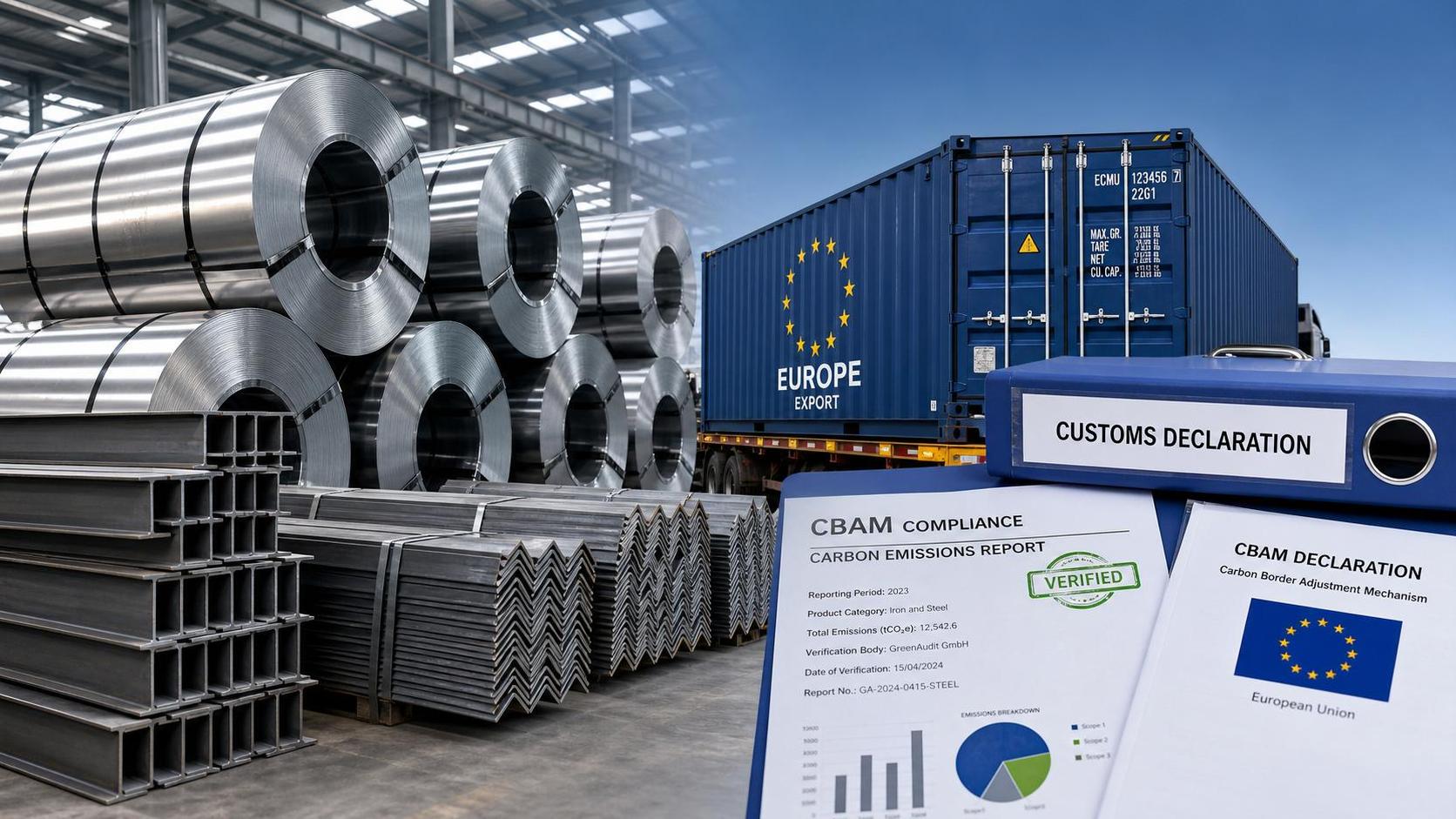
On July 15, 2026, the EU moved the steel-related CBAM transition into a mandatory reporting stage, making quarterly embedded carbon disclosures a practical compliance requirement for companies exporting steel and structural steel products to the EU. For exporters, buyers, processors, and supply chain teams handling products such as hot-rolled coil, H-beams, and angle steel, the development matters because reporting is now tied not only to documentation readiness but also to customs clearance and later access to the formal taxation stage.
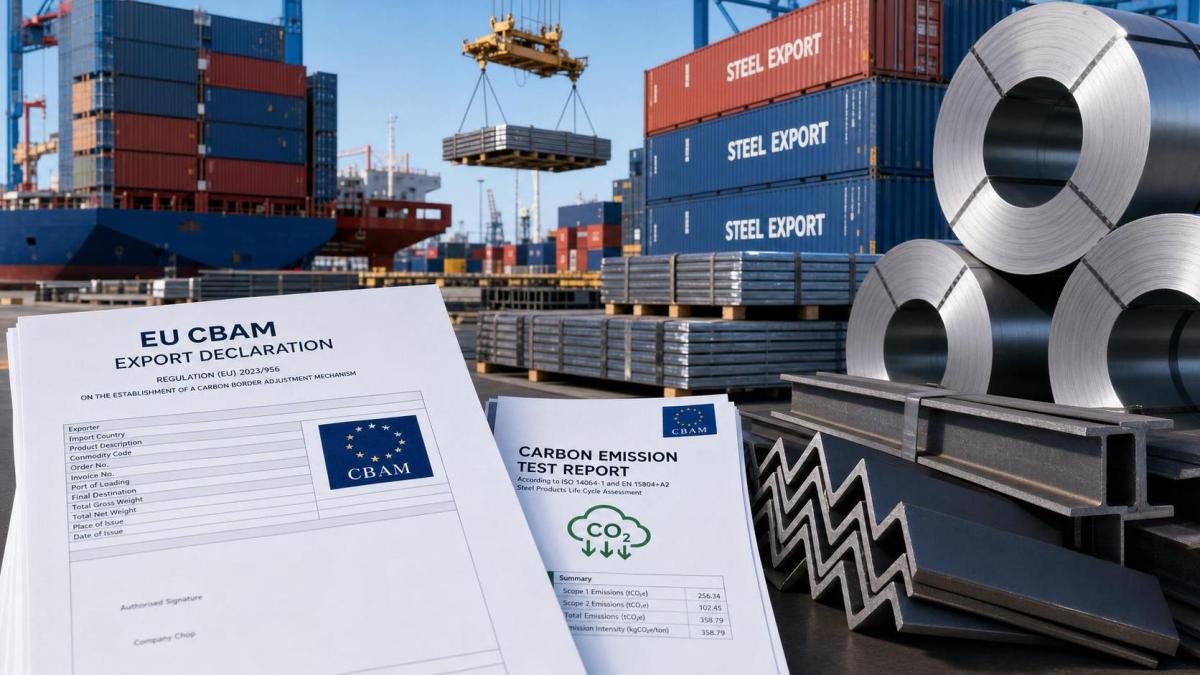
What the new reporting stage requires
From July 15, 2026, CBAM for steel entered a compulsory reporting phase in the EU. All companies exporting steel and section products to the EU, including Chinese suppliers, are required to submit embedded carbon emissions data on a quarterly basis. The covered product scope includes major section categories such as hot-rolled coil, H-beams, and angle steel. According to the provided information, failure to submit compliant reports may affect customs clearance and eligibility for the later formal taxation phase.
Where the pressure is likely to appear first
Export-facing transactions may face tighter document control
From an industry perspective, direct exporters are likely to feel the change first because they sit closest to the reporting obligation attached to shipments into the EU market. The immediate impact is likely to fall on export documentation workflows, product data collection, and the ability to organize quarterly embedded carbon reporting in a consistent format. What deserves closer attention is whether internal trade, customs, and compliance teams can align product scope, shipment records, and emissions-related information without creating delays at delivery stage.
Manufacturers and processors may be asked for more product-level emissions data
Analysis shows that processing and manufacturing companies supplying hot-rolled coil, H-beams, angle steel, or similar steel sections may come under increased pressure from export customers. The reason is straightforward: once quarterly reporting becomes mandatory, upstream production-side data becomes more relevant to downstream compliance filings. In practice, this may affect technical documentation, traceability records, and the completeness of emissions-related supporting materials requested during order execution.
Procurement and buyer-side review may become more structured
Observably, procurement teams and buyers sourcing steel products for EU-bound business may need to pay closer attention to supplier readiness. The impact is not limited to price or delivery scheduling; it may extend to whether suppliers can support compliant reporting and provide the documentation needed for embedded carbon declarations. This makes supplier qualification, order review, and delivery coordination more sensitive to compliance readiness than before.
Supply chain service providers may face new coordination demands
Supply chain service participants involved in shipment handling, trade support, or document management may also be affected because incomplete or inconsistent reporting can influence customs clearance. From an operational perspective, the change may increase coordination demands across exporters, manufacturers, and logistics-related teams, especially where multiple parties contribute to the final shipment file.
What companies should track in current operations
Quarterly reporting readiness should be treated as an active workflow issue
It is more appropriate to understand the new stage as an operational compliance requirement rather than a distant policy signal. Companies involved in EU-bound steel exports should closely review whether they can gather, verify, and organize embedded carbon information in step with quarterly reporting cycles. Where the execution method is not fully described in the provided information, businesses should avoid assuming that existing trade paperwork alone will be sufficient.
Product scope and shipment mapping deserve closer review
What deserves closer attention is the range of products already identified in the provided information, including hot-rolled coil, H-beams, and angle steel. Companies should pay attention to how these categories are matched to export orders, internal product descriptions, technical files, and shipment documentation. This is particularly relevant where one supplier serves several customers or where product naming differs between production, sales, and export records.
Supplier qualification and supporting materials may become more important
Analysis shows that exporters and procurement teams may need to ask more from suppliers in terms of supporting documents and technical records connected to embedded carbon reporting. The provided information does not define a full execution standard, so current attention should stay on document completeness, consistency across transaction records, and the ability to respond if customers or downstream partners request additional support for compliant filing.
Delivery planning should account for compliance-related friction
Because non-compliant reporting may affect customs clearance and later market access under the formal taxation stage, companies should watch for possible pressure on shipment timing, order release, and handover procedures. This should not be read as a confirmed disruption scenario, but as a practical area requiring monitoring in export planning and customer communication.
Why this looks more like an execution signal than a distant policy headline
Observably, this development is more than a general policy update because the reporting phase is described as mandatory from a defined date and linked to customs clearance as well as later eligibility. That makes it more appropriate to understand the change as an execution signal already entering business processes. At the same time, analysis should remain disciplined: the provided information does not include detailed enforcement methods, document templates, or authority-specific guidance, so parts of the practical implementation still require observation.
From an industry perspective, the most relevant takeaway is that CBAM-related compliance for steel exports is moving closer to day-to-day trade operations. The issue is no longer limited to broad sustainability positioning; it now touches order handling, supplier coordination, and shipment readiness in a more immediate way.
How this update is best understood for now
At this stage, the update is best read as a concrete rule implementation step affecting steel and section exports to the EU, especially where quarterly embedded carbon reporting now becomes compulsory. The direct significance lies in compliance access: reporting readiness may influence customs processing and later participation in the formal taxation stage. A neutral reading is still necessary, because broader market effects and final execution outcomes depend on how detailed requirements are applied in practice.
Basis of this article and points still requiring verification
This article is generated from the user-provided news title, event date, and event summary. For developments of this type, relevant source categories typically include official announcements, releases from regulatory authorities, customs or trade administration information, industry association updates, standard-setting documents, and reporting by authoritative media. No specific official source link was provided in the input, so the exact official publication path still requires follow-up verification.
Further observation is still needed on detailed policy wording, reporting interpretation, certification or compliance application standards, possible changes in tender or procurement documents, market feedback, and how companies implement the reporting requirement in actual export operations.
By clicking 'Allow All', you agree to the storage of cookies on your device to enhance site navigation, analyze site usage and assist with our marketing efforts. Coo Cookie Notice