




On July 16, 2026, the U.S. Department of Commerce announced a fast-track Sunset Review covering the anti-dumping order on hot-rolled coil (HRC) from China. The review puts the current 12.5%–48.3% anti-dumping duty range under renewed examination and is expected to produce a result in January 2027. For steel importers, procurement teams, customs-facing functions, and supply chain operators serving the U.S. market, this is worth close attention because it affects how pricing, clearance compliance, and purchasing plans may be handled over the next 12 to 18 months.
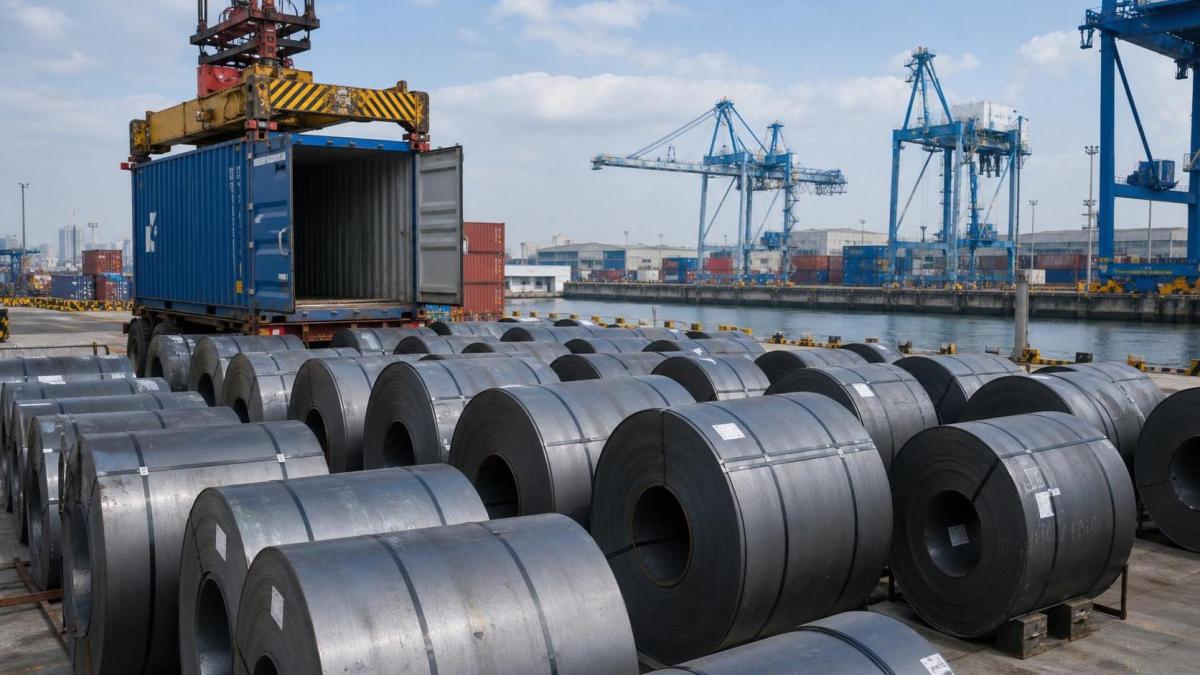
What the current review formally covers
The confirmed facts are limited but commercially relevant. The U.S. Department of Commerce issued the notice on July 16, 2026, and formally opened the first fast-track Sunset Review of the anti-dumping duty order on Chinese-origin HRC. The review will determine whether the existing anti-dumping duty rates, currently set at 12.5% to 48.3%, should remain in place. The expected timing for the outcome is January 2027.
Where the pressure may appear first in steel trade execution
Import purchasing and sourcing decisions
From an industry perspective, U.S.-facing importers and procurement teams may be the first to feel the impact because their buying decisions must account for possible continuity in duty exposure. The immediate business issue is not only price comparison, but also whether sourcing plans, supplier selection, and order timing remain aligned with a trade environment that is still under review. What deserves closer attention is the relationship between procurement commitments and the possibility that the current duty structure may continue.
Customs compliance and clearance preparation
Companies responsible for customs filings and shipment clearance may need to monitor product classification, origin-related documentation, and transaction records more carefully during the review window. Analysis shows that even without a final outcome yet, trade compliance teams may need to ensure that internal files, shipment documentation, and duty-related assumptions remain consistent with the existing order while the review is pending.
Manufacturing and downstream delivery planning
Processors, manufacturers, and distributors that rely on HRC as an input or tradable product may also need to reassess planning assumptions. Observably, the concern is less about an immediate rule change already in force and more about how future landed cost uncertainty can affect quotation cycles, delivery commitments, and budget forecasting tied to U.S.-bound business.
Logistics and supply chain service coordination
Supply chain service providers, including those supporting shipping schedules, document coordination, and delivery execution, may face closer scrutiny from customers that want clearer visibility on trade compliance and cost exposure. In practice, the review period may increase the need for tighter coordination between commercial teams and logistics operators, especially where shipment timing interacts with procurement and customs planning.
What companies should monitor before the January 2027 outcome
Keep compliance files aligned with the existing order
Analysis shows that companies dealing in Chinese-origin HRC should continue to work on the assumption that the current anti-dumping framework remains relevant until an official outcome is published. That makes record consistency, origin-related documentation, and customs-facing paperwork a practical area for review rather than an administrative afterthought.
Recheck procurement budgets and quotation validity
For importers and downstream buyers, the main operational question is how to manage quotations, cost models, and purchasing commitments during a period when the review result is not yet known. It is more appropriate to understand this as a planning and budgeting issue as much as a legal or customs issue, particularly for contracts extending into the next 12 to 18 months.
Watch official wording and execution signals closely
The available information does not provide detailed implementation language beyond the review launch, so companies should avoid treating the case as if a new final rule has already been set. What deserves closer attention is any later official wording that clarifies scope, continuation, or the practical handling of the order after the review result is issued.
Link trade review developments to delivery commitments
Businesses with U.S.-related delivery schedules should examine whether duty exposure assumptions are reflected in shipment timing, customer commitments, and supplier coordination. Observably, even without a confirmed change in rates today, delivery planning can still be affected when procurement and customs teams need to preserve flexibility pending the January 2027 decision.
Why this looks more like a live policy signal than a settled outcome
Analysis shows that this development should not be read as a completed policy change, because the review has only been initiated and the result is still pending. At the same time, it should not be dismissed as routine background noise. It is more appropriate to understand this as a live execution signal: the current anti-dumping framework remains commercially important, and market participants with exposure to Chinese HRC in the U.S. trade flow may need to prepare for continued duty-related planning. The key issue for now is not a confirmed new burden, but the persistence of regulatory uncertainty around sourcing, customs treatment, and cost calculation.
How the market may need to read this stage
At this stage, the review is best understood as an active trade rule process with practical consequences for procurement, compliance, and supply chain planning, rather than as a finalized shift in market conditions. The confirmed facts support a cautious reading: the existing anti-dumping duty range is under review, the outcome is expected in January 2027, and affected businesses may need to keep their operating assumptions disciplined over the coming months. A neutral industry reading is that the matter has moved into a phase where execution attention matters, while final conclusions still require continued observation.
Basis of this article and what still needs verification
This article is generated on the basis of the user-provided news title, event date, and event summary. For developments of this type, relevant source categories commonly include official notices, releases from regulatory authorities, customs or trade administration information, industry association updates, standard-setting documents, and reporting by established business or trade media. A specific official source link was not provided in the input, so that point still requires follow-up verification. Further observation is also needed regarding later official wording, practical compliance interpretation, procurement document updates, tender document changes, market feedback, and how companies ultimately adjust execution after the review result is published.
By clicking 'Allow All', you agree to the storage of cookies on your device to enhance site navigation, analyze site usage and assist with our marketing efforts. Coo Cookie Notice