



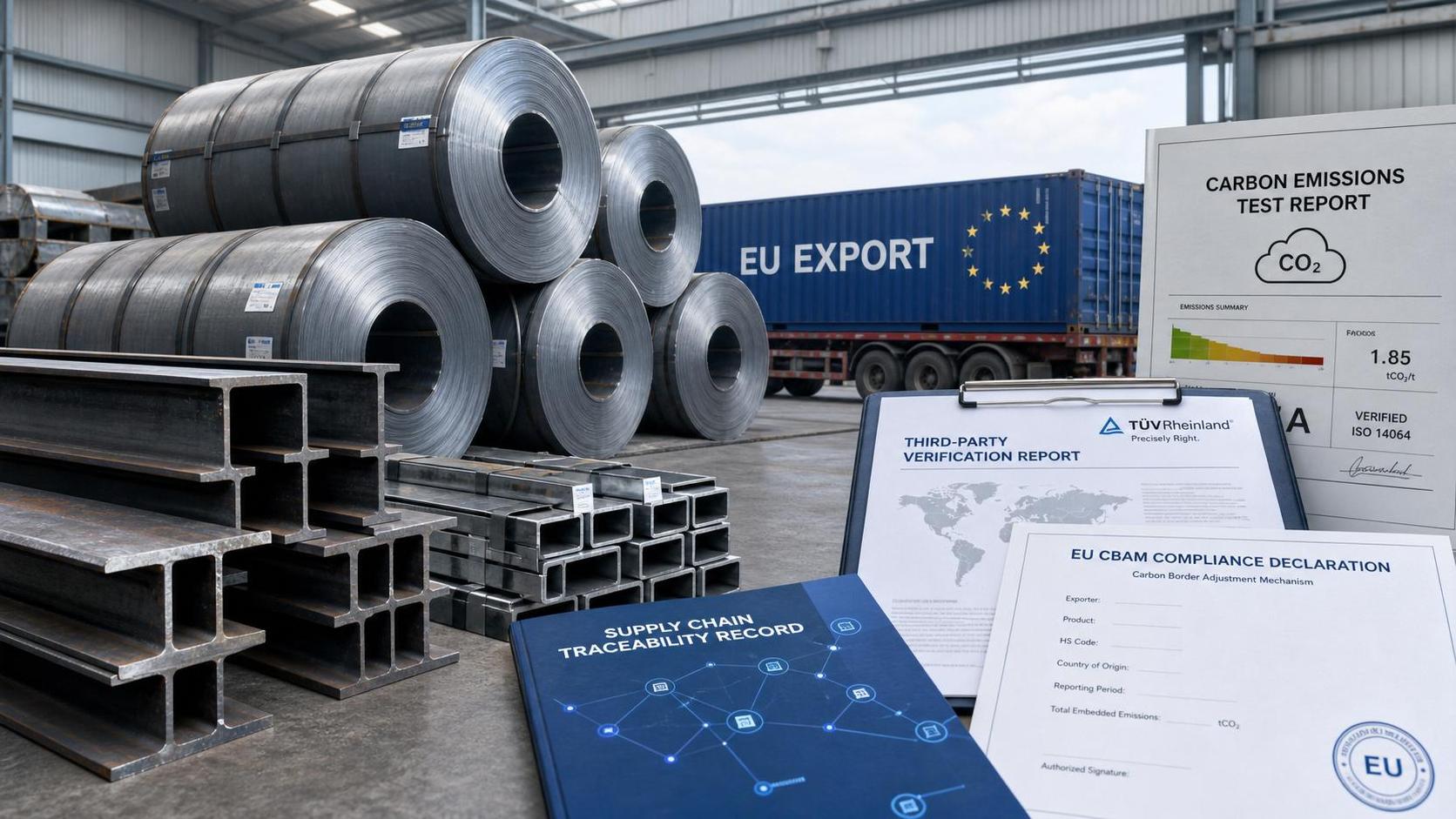
On July 17, 2026, the European Commission formally moved the CBAM framework for certain steel products into a mandatory transitional reporting stage. For Chinese exporters shipping products such as hot-rolled coil, H-beams, and cold-formed sections to the EU, the immediate issue is no longer policy awareness alone but quarterly disclosure of embedded carbon emissions together with third-party verification. This matters across export trade, procurement, customs handling, and delivery planning because compliance costs and clearance timing may now become more sensitive to documentation quality and reporting readiness.
What Has Officially Taken Effect
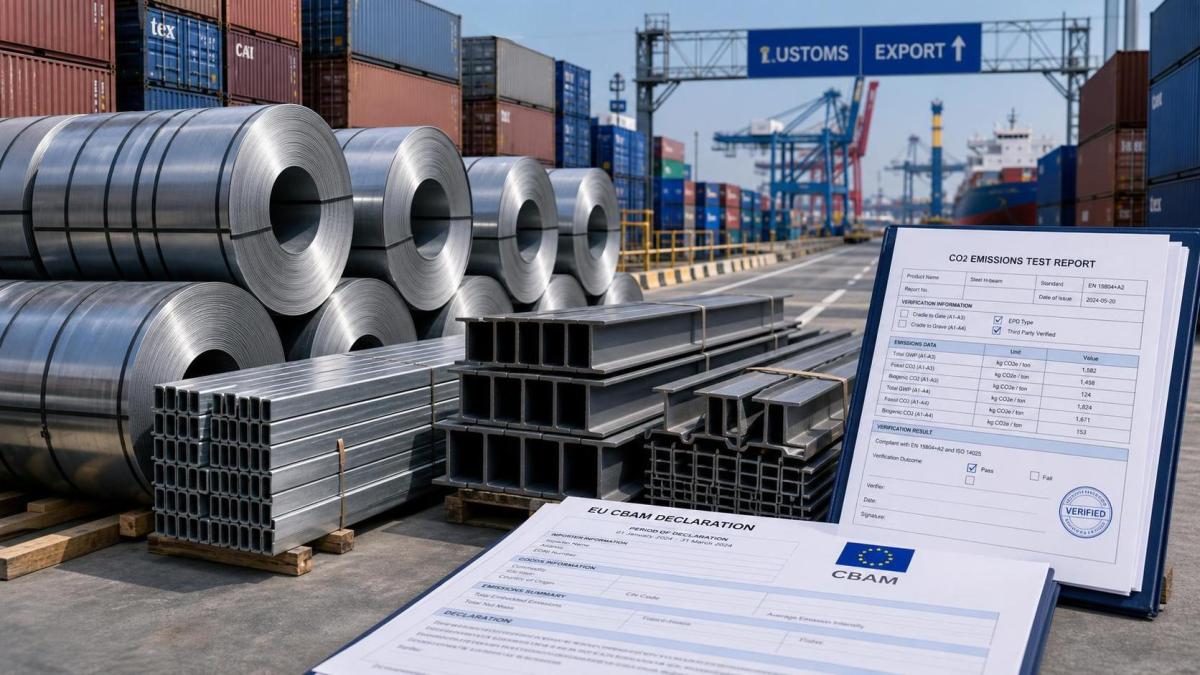
According to the information provided, from July 17, 2026, the EU CBAM entered a mandatory data reporting transition period for relevant steel products. Chinese exporters sending steel products including hot-rolled coil, H-beams, and cold-formed sections to the EU are required to submit embedded carbon emissions data on a quarterly basis, along with third-party verification reports.
The same information indicates that the new requirement directly affects procurement-related compliance costs and customs clearance efficiency. Companies that do not meet the requirement may face delayed release of goods or be placed on a high-risk supplier list.
Where the Pressure May Appear First
Exporters face a documentation and timing challenge
From an industry perspective, direct trading companies are likely to feel the change first because the rule is tied to quarterly reporting and supporting verification. The main impact may appear in export preparation, internal data collection, and shipment coordination. What deserves closer attention is whether reporting materials can be prepared in step with delivery schedules, as any mismatch could affect customs timing.
Procurement teams may see compliance costs move upward
For procurement-related functions, the reported change matters because the new requirement is described as having a direct effect on compliance costs. Analysis shows that this is not only a pricing issue but also a process issue: purchasing decisions may need to account for the availability, consistency, and verifiability of emissions-related data linked to covered steel products.
Processors and manufacturers may need tighter upstream coordination
For manufacturers and processors involved in EU-bound steel supply, the impact may emerge through supplier coordination and production documentation. Observably, if an exporter must submit embedded carbon data and third-party verification, upstream manufacturing links may come under greater pressure to provide timely and usable records, even though the provided information does not specify detailed implementation methods.
Supply chain and customs-facing service providers should watch execution risk
Logistics, customs, and other supply chain service providers may be affected through clearance timing and exception handling. Since non-compliant companies may face delayed release or higher-risk treatment, service providers will likely need closer communication with exporters on document completeness, submission timing, and shipment contingencies.
What Companies Should Watch Now
Keep the reporting cycle aligned with shipment planning
Analysis shows that quarterly reporting is not just an administrative requirement. For companies exporting covered steel products to the EU, the practical issue is whether emissions data preparation and third-party verification can keep pace with order execution and customs deadlines.
Pay attention to product scope in daily operations
What deserves closer attention is the treatment of product categories already named in the provided information, including hot-rolled coil, H-beams, and cold-formed sections. Companies involved in these categories may need to review whether internal classification, order handling, and client communication are fully consistent with reporting obligations.
Separate formal compliance from smooth customs execution
Observably, meeting a reporting requirement and achieving normal clearance may not always be the same operational task. Since the provided information specifically mentions customs timing risk and possible high-risk supplier designation, companies should focus on how reporting documents, verification materials, and shipment files work together in practice.
Prepare for customer and supplier communication pressure
From an industry perspective, this type of rule change can create immediate communication demands across both ends of the supply chain. Exporters may need to confirm data readiness with suppliers while also responding to EU-side customer concerns over compliance status, delivery timing, and documentation completeness.
Why This Looks Like More Than a Short-Term Filing Update
This section is an editorial observation. It is more appropriate to understand this development as an operational compliance signal rather than a routine paperwork adjustment. The information provided already connects the rule to cost, clearance timing, and supplier risk treatment, which means the market impact may show up in day-to-day execution before any broader strategic conclusions can be confirmed.
At the same time, it should not be overstated beyond the confirmed facts. The provided information does not establish wider market outcomes, long-term pricing effects, or final trade shifts. What it clearly signals for now is that carbon-related reporting for EU-bound steel trade has moved closer to frontline business operations.
How the Market May Best Read This Stage
In practical terms, this update is best read as a concrete compliance development with near-term operational consequences and possible longer-term implications that still require observation. The confirmed facts point to immediate pressure on reporting readiness, verification support, procurement compliance cost, and customs efficiency. A neutral reading is that the rule already matters in execution, while its broader commercial effects still need to be tracked carefully rather than assumed.
Basis of This Article and What Still Needs Verification
This article is based on the user-provided news title, event date, and event summary. For this type of development, commonly relevant source categories may include official announcements, company disclosures, industry association updates, authoritative media coverage, and standards-related documents.
No specific official source link was provided in the input, so the exact official publication path remains to be verified on an ongoing basis. Follow-up attention should remain on any subsequent official wording, implementation clarifications, and practical enforcement details affecting reporting, verification, and customs handling.
By clicking 'Allow All', you agree to the storage of cookies on your device to enhance site navigation, analyze site usage and assist with our marketing efforts. Coo Cookie Notice