




On July 10, 2026, the EU’s Carbon Border Adjustment Mechanism (CBAM) moved beyond crude steel and began covering additional steel categories including hot-rolled sections, cold-formed sections, and high-alloy structural steel. For exporters shipping these products to the EU, the change matters immediately because carbon reporting is no longer a peripheral compliance issue: it now affects quotation logic, customs preparation, delivery timing, and supplier coordination. Importers and buyers are also pulled into the process through updated contract terms and carbon data requirements.
What the revised EU rule now covers
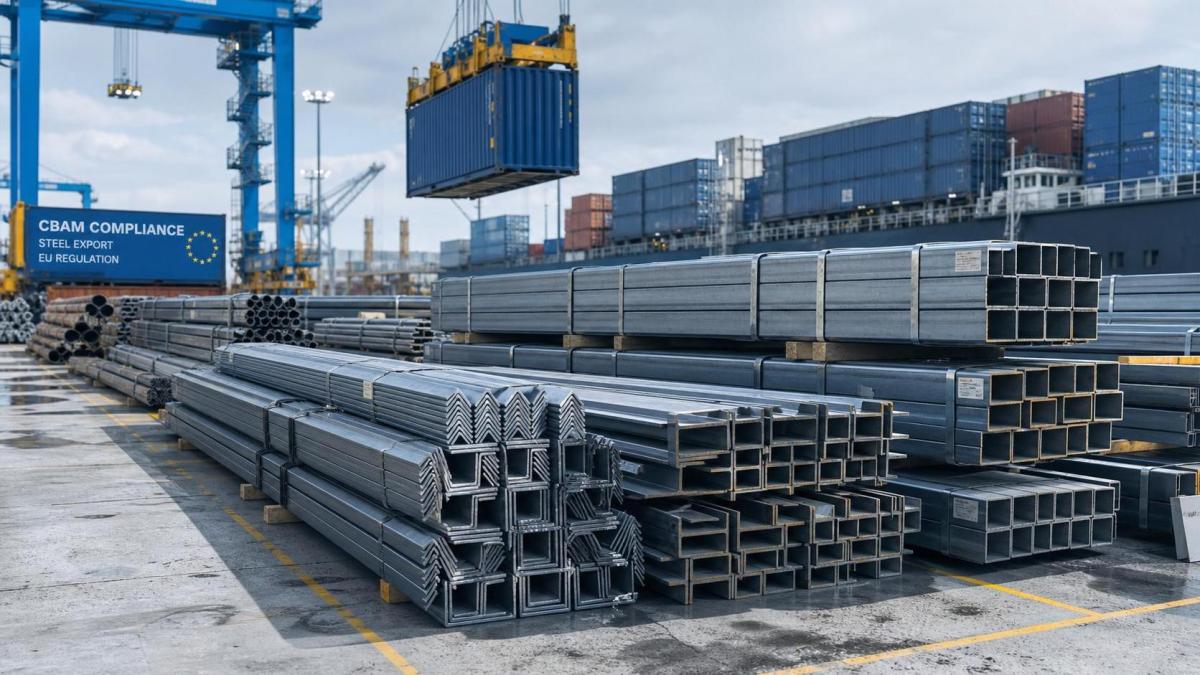
The European Commission issued amending regulation (EU) 2026/1421 on July 9, 2026. According to the information provided, the amendment expands CBAM coverage from crude steel to hot-rolled sections, cold-formed sections, and high-alloy structural steel.
From July 10, 2026, exports of these products to the EU must be accompanied by embedded carbon emissions data verified by an accredited third party. The same information also states that CBAM certificates must be purchased in advance for these shipments.
The stated direct effect is on Chinese steel exporters’ pricing to the EU, customs clearance procedures, and delivery cycles. Importers are also required to update procurement compliance clauses and supplier carbon data management requirements.
Where the impact is likely to be felt first
Pressure points for steel exporters selling into the EU
From an industry perspective, exporters are likely to feel the impact first in commercial offers and shipment preparation. Once embedded carbon data must be verified by an accredited third party and CBAM certificates must be pre-purchased, EU-facing quotations can no longer be treated as a simple material-plus-freight calculation. What deserves closer attention is whether sales, compliance, and documentation teams are aligned before orders move into shipment.
New demands on importers and procurement teams
EU importers and procurement teams are also directly affected because the input information makes clear that procurement compliance clauses and supplier carbon data management requirements need to be updated. In practice, this points to tighter supplier screening, more formal document requests, and closer review of whether submitted emissions data can support customs and purchasing processes.
Operational implications for customs and delivery coordination
Analysis shows that customs handling and delivery scheduling are likely to become more sensitive than before. If carbon data verification and certificate pre-purchase become part of the shipment process, any mismatch between product classification, emissions documentation, and order timing may affect clearance preparation and delivery commitments. Supply chain service providers involved in document flow and shipment coordination therefore also have reason to monitor this change closely.
What companies should watch in day-to-day execution
Product scope must be checked against actual export portfolios
What deserves closer attention is whether current EU-bound product lines include hot-rolled sections, cold-formed sections, or high-alloy structural steel. The policy change is category-specific, so companies need to confirm where these items sit in their export mix before assuming existing steel compliance routines are sufficient.
Carbon data readiness is now part of order execution
Analysis shows that embedded carbon data can no longer be handled as a back-end reporting exercise for the covered products. The requirement for accredited third-party verification means companies need to look closely at data collection, document consistency, and timing within the order cycle, especially where multiple internal teams or external suppliers are involved.
Commercial terms may need to be revisited
Because the provided information points directly to an effect on pricing to the EU, exporters and importers should review how carbon-related obligations are addressed in quotations, purchase terms, and supplier commitments. Observably, the practical issue is not only cost expression, but also which party is responsible for data preparation, verification coordination, and certificate-related compliance steps.
Delivery promises should reflect compliance timing
The summary provided also links the rule change to delivery cycles. That makes lead-time management a concrete concern. Companies handling EU shipments of the newly covered products should pay attention to whether internal planning, customer communication, and shipment booking assumptions still match the compliance sequence now required.
Why this reads as more than a one-day procedural update
Observably, this is not just a narrow customs adjustment. The immediate rule change is factual and already in force from July 10, 2026, but the wider significance lies in how carbon verification is moving further into routine steel trade execution. It is more appropriate to understand this as both a short-term operational change and a longer-term compliance signal for companies active in EU-linked steel business.
At the same time, this article should not treat every downstream effect as settled fact. Analysis shows that the clearest confirmed points are the expanded product scope, the verification requirement, the certificate pre-purchase requirement, and the direct pressure on pricing, clearance, delivery, and procurement compliance. How individual firms absorb that pressure will still depend on their product mix and transaction structure.
How the market is likely to frame this development
From an industry perspective, the most reasonable reading is that the announcement has already created a concrete compliance threshold for covered steel products entering the EU. The change should not be overstated as a complete reset of steel trade, but it should also not be treated as a symbolic policy note. For the affected categories, it has immediate relevance to transaction terms, document readiness, and shipment management.
It is more appropriate to understand this development as an operationally active policy change with longer-term strategic implications still worth watching. That is why both exporters and importers need to follow not only the legal wording already issued, but also how the new requirements are translated into daily procurement and delivery practice.
Basis of this article and points for continued verification
This article is based on the user-provided news title, event date, and event summary concerning the EU’s expansion of CBAM coverage for steel products. The information provided states that the European Commission issued amending regulation (EU) 2026/1421 on July 9, 2026, with implementation beginning on July 10, 2026.
For developments of this kind, commonly relevant source types include official government or regulatory notices, company disclosures, industry association updates, authoritative media reporting, and standard-setting documents. No specific official source link was included in the input, so the exact official link still needs ongoing verification. Continued attention should be given to any further official wording, implementation guidance, and practical updates affecting product scope, documentation, procurement clauses, and customs execution.
By clicking 'Allow All', you agree to the storage of cookies on your device to enhance site navigation, analyze site usage and assist with our marketing efforts. Coo Cookie Notice