



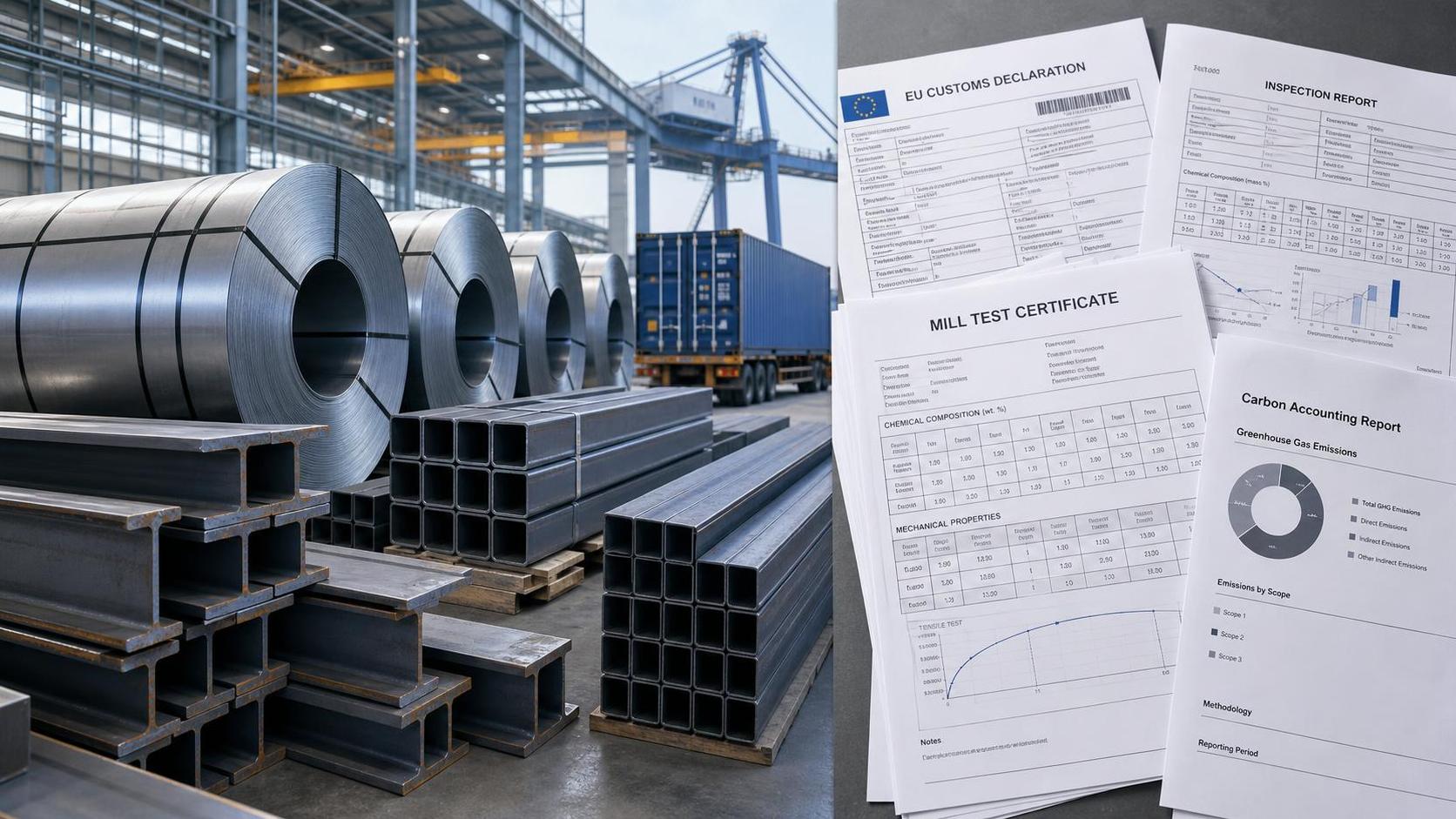
On August 1, 2026, the European Commission moved the CBAM transition period for steel products into a mandatory full-scope reporting phase. Exporters shipping steel and structural steel products to the EU, including hot-rolled coil, H-beams, and square or rectangular tubes, now face batch-by-batch reporting requirements through the CBAM system for embedded carbon emissions and third-party verification materials. This deserves close attention across export trade, procurement, manufacturing, compliance, and delivery functions because the change directly affects customs processing and raises the practical cost of non-compliance.
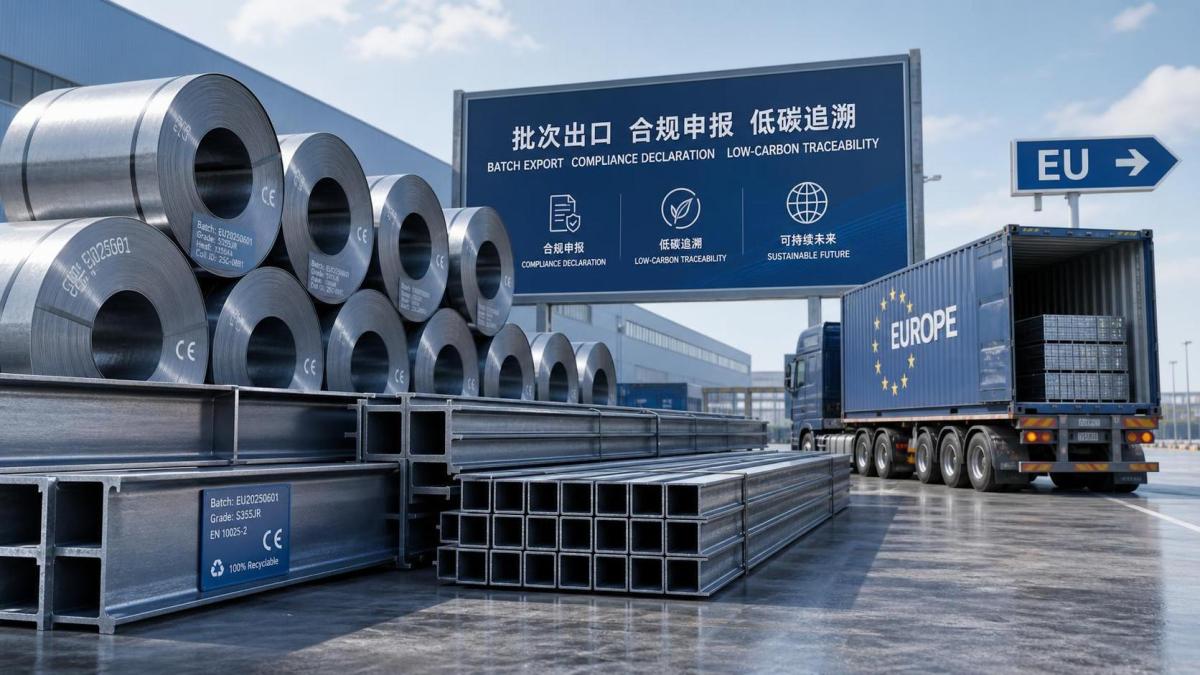
What the new filing stage now requires
The confirmed change is that, from August 1, 2026, the CBAM transition period entered a compulsory full-coverage declaration stage for relevant steel exports to the EU. Exporters of steel products and sections covered by the event summary must submit embedded carbon emissions data for each shipment through the CBAM system and provide a third-party verification report. The products explicitly referenced include hot-rolled coil, H-beams, and square or rectangular tubes.
The confirmed compliance consequence is also clear in the event summary: failure to complete compliant reporting may lead to customs clearance delays, additional guarantee requirements, and later exposure to penalty risk in the formal phase.
Where the pressure is likely to appear first
Export transactions are moving from document support to shipment-level compliance
From an industry perspective, exporters are the first group directly affected because the requirement applies batch by batch through the CBAM system. The practical impact is likely to appear in export documentation workflows, shipment release timing, and internal review procedures for emissions data and verification materials. What deserves closer attention is whether existing export files, product specifications, and shipment records are organized in a way that supports consistent reporting for each consignment.
Manufacturers may face tighter demands for emissions traceability
Analysis shows that producers supplying steel and related sections for EU-bound orders may come under greater pressure from customers or trading companies to provide emissions-related information in a form that can be used for CBAM submission. The affected business links are likely to include production record preparation, technical documentation, and coordination with third-party verification arrangements. Even where the filing obligation sits with the exporter, manufacturers may still be pulled into the compliance chain because shipment-level reporting depends on underlying product data.
Procurement and supply chain teams may need to revisit supplier readiness
Observably, procurement and supply chain teams are exposed where products are sourced from multiple suppliers or processed across several stages before export. The immediate concern is not a change in product demand stated as fact, but a compliance readiness issue: whether suppliers can provide the carbon-related information and supporting materials needed for timely filing. This may affect purchase scheduling, supplier screening, handover documents, and delivery coordination for EU-bound steel orders.
Verification and service partners may become more operationally relevant
It is more appropriate to understand this as a stronger operational role for verification-related service providers rather than a broad market conclusion. Because the event summary explicitly requires third-party verification reports, companies involved in testing, verification support, compliance document preparation, or trade servicing may become more closely tied to export execution. The relevant business focus is the completeness, timing, and consistency of supporting materials attached to each shipment.
Practical points companies should keep under review
Check whether product files can support batch-level CBAM submission
Analysis shows that companies shipping covered steel products should review whether existing product and shipment files can support per-batch reporting in the CBAM system. The issue is not only whether data exists, but whether it is organized, reviewable, and aligned with the reporting process and third-party verification materials referenced in the event summary.
Watch the handoff between exporter, producer, and verifier
What deserves closer attention is the transfer of responsibility across the supply chain. Where exporters rely on upstream manufacturers for emissions-related inputs, or on outside parties for verification documents, the timing and completeness of that handoff may become a practical risk point. In the absence of more detailed execution rules in the input, this should be treated as a compliance coordination issue that still needs close monitoring.
Reassess delivery planning for EU-bound shipments
Observably, the stated risk of customs delays means delivery planning may need a more cautious review for covered products moving to the EU. Companies may need to pay attention to whether reporting files and verification documents are ready early enough to avoid disruption at the clearance stage. This is not yet a claim about universal delay outcomes, but a reasonable operational concern based on the compliance consequence described in the event summary.
Keep an eye on formal-phase exposure
The summary also links current non-compliance with later formal-stage penalty risk. It is more appropriate to understand this as an execution signal rather than a completed enforcement result. Companies involved in EU steel exports should therefore pay attention not only to current filing mechanics, but also to how present reporting records may affect later compliance review.
Why this looks like an execution signal, not just a policy update
Analysis shows that this development is better read as a rule moving into active operational use. The key shift is not simply that CBAM remains relevant to steel exports, but that reporting in the transition period is described here as mandatory, full-scope, and shipment-based, with stated consequences for non-compliance. That makes the change more than a policy headline for exporters and their supply chain partners.
At the same time, observably, the input does not provide detailed implementation guidance beyond the core filing obligation, covered product examples, and stated compliance risks. For that reason, the market still needs to watch how reporting expectations, verification practices, and document review standards are applied in day-to-day trade execution.
How the market may best read this development now
At this stage, the event is best understood as a concrete compliance step affecting steel exports to the EU rather than a general policy discussion. The immediate significance lies in reporting readiness, document quality, verification support, and shipment execution discipline. A measured reading is more appropriate than a broad market conclusion: the rule change is clearly in force as described, while its detailed operational effects across procurement, manufacturing, customs handling, and customer requirements still warrant continued observation.
Basis of this article and what still needs verification
This article is generated based on the user-provided news title, event date, and event summary. For developments of this kind, relevant source categories typically include official announcements, regulatory releases, customs or trade authority information, industry association updates, standards-related documents, and reporting by established trade or business media. A specific official source link was not provided in the input, so the exact official publication path still needs to be verified.
Further observation is still needed on any detailed implementing language, verification practice, filing interpretation, tender document adjustments, and feedback from companies handling actual export execution under the new requirement.
By clicking 'Allow All', you agree to the storage of cookies on your device to enhance site navigation, analyze site usage and assist with our marketing efforts. Coo Cookie Notice