



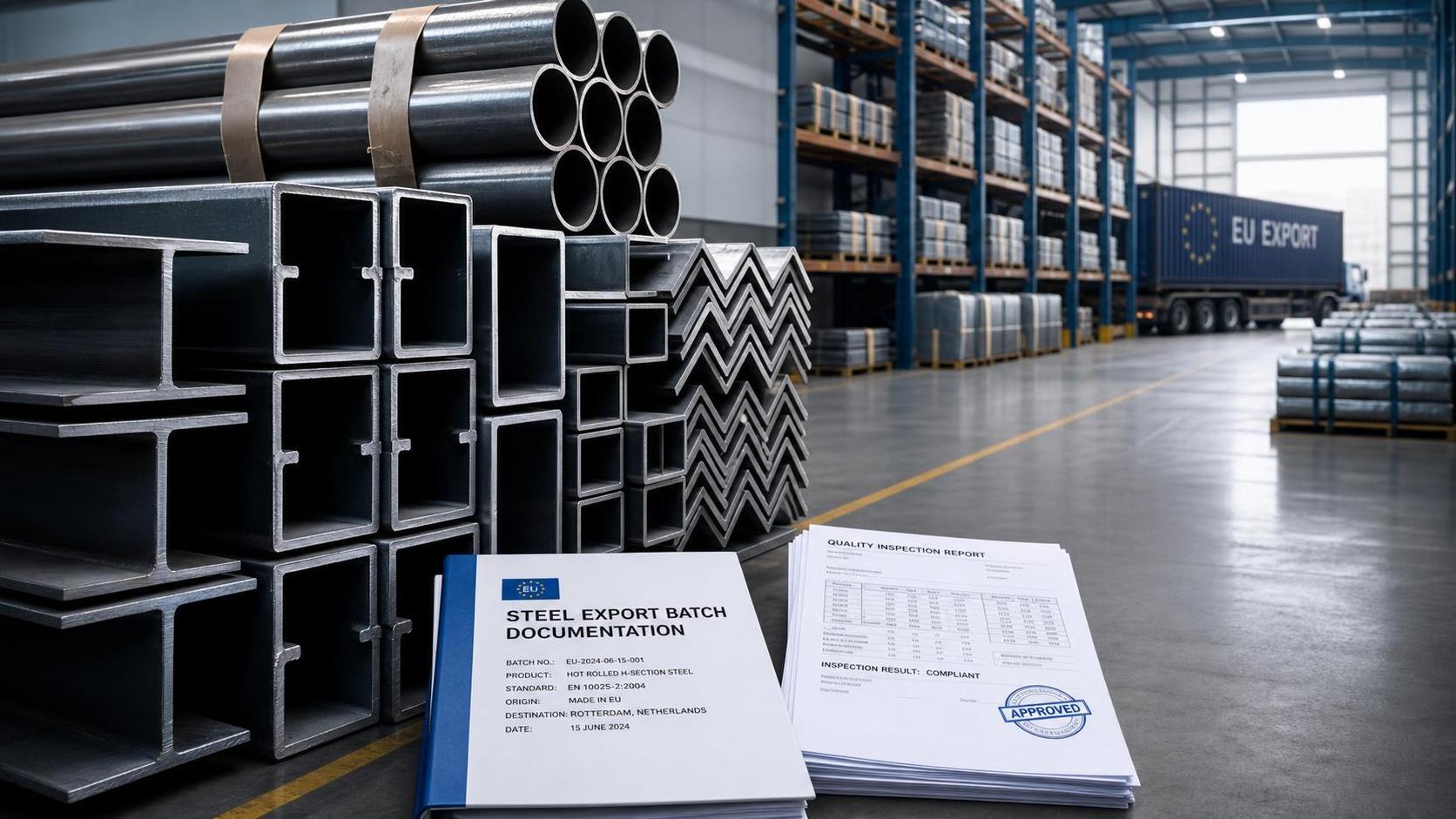
On July 21, 2026, the EU put into effect a wider transitional scope for the Carbon Border Adjustment Mechanism (CBAM) covering steel products, extending the requirement to steel and section products exported to the EU. For exporters, fabricators, traders, import-side buyers, and supply chain service providers linked to steel shipments, this is a rule change with direct consequences for customs compliance, shipment timing, and import clearance costs. What deserves closer attention is that the development is not just about carbon reporting in principle, but about whether product-by-product and batch-level documentation can support actual market access.
What the expanded transition scope now requires
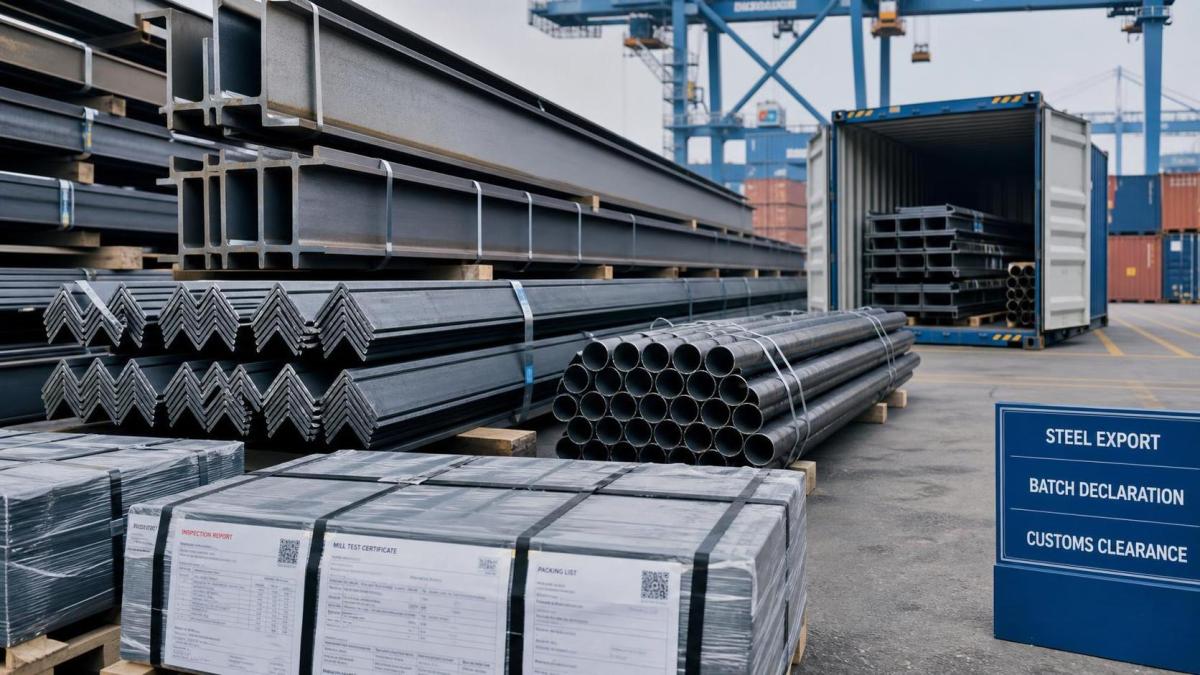
The confirmed information shows that from July 21, 2026, the EU CBAM transition period has been expanded to cover all steel and section products exported to the EU, including products such as H-beams, angle steel, channel steel, and seamless steel pipes. Exporters are required to submit embedded carbon emissions data on a batch-by-batch basis and accept third-party verification. The stated impact directly reaches the customs declaration compliance process of Chinese steel exporters, the delivery cycle of orders, and the clearance cost borne by downstream importers. Products that have not completed CBAM registration or data declaration will be refused entry.
Where the immediate pressure is likely to appear
Export shipments now depend on emissions data readiness
From an industry perspective, exporters are the first group exposed to the operational effect of the rule change because customs filing and border entry are now linked to CBAM registration and emissions reporting. The main pressure point is no longer only shipment preparation in the traditional trade sense, but whether each batch can be supported by complete carbon-related declarations and third-party verification materials.
Manufacturing and processing firms may face tighter document coordination
For steel processors and manufacturers supplying EU-bound orders, the change may affect how production records, technical documents, and shipment files are prepared for export transactions. Analysis shows that where multiple product forms are involved, including structural steel sections and pipes, the practical issue may be the consistency between product batches, embedded emissions information, and the documents used for export compliance.
Import-side buyers and channel participants may see higher clearance friction
Downstream importers and distribution participants connected to EU-bound trade may be affected through clearance cost and timing. The confirmed information already indicates that importer-side clearance costs are directly affected. Observably, buyers and channel partners may need to pay closer attention to whether upstream suppliers have completed CBAM-related registration and whether batch documentation is available before shipment dispatch.
Supply chain service providers may need to adjust timing assumptions
Freight, customs, and related supply chain service participants may be affected because documentation gaps can interrupt entry procedures. It is more appropriate to understand this as a compliance-linked delivery issue: where required CBAM data or verification is missing, shipment schedules and handover expectations may no longer align with prior export routines.
Practical points companies should watch now
Review whether current export files can support batch-level declarations
Analysis shows that companies involved in EU-bound steel shipments should focus first on whether existing trade and technical documents can support batch-based embedded emissions reporting. The key concern is not a general sustainability statement, but the availability of records that can match specific shipments and product categories.
Check the role of third-party verification in transaction planning
The event summary confirms that exporters must accept third-party verification. Where execution details are not further provided in the input, it remains important to watch how verification requirements are applied in practice, how they interact with shipment preparation, and whether any mismatch between transaction timing and verification timing could affect delivery commitments.
Reassess order lead times and customs handover arrangements
Because the confirmed impact includes export declaration procedures and delivery cycles, companies should closely monitor whether current lead-time assumptions remain workable for EU-bound orders. This is especially relevant for contracts, shipment windows, and handover planning where customs compliance documents are assembled close to dispatch.
Pay attention to supplier qualification and buyer-side document expectations
For procurement teams, traders, and downstream buyers, what deserves closer attention is whether suppliers can provide CBAM-related registration status, emissions declarations, and supporting verification in a usable form. Where the input does not provide further implementation detail, this should be treated as a live compliance checkpoint rather than a settled administrative routine.
Why this looks more like an execution signal than a distant policy topic
Observably, this development is better understood as an implemented compliance signal rather than a broad policy discussion. The reason is straightforward: the change is tied to product coverage, batch-level reporting, third-party verification, and the possibility of entry refusal. At the same time, analysis should remain measured. The input does not provide fuller detail on enforcement rhythm, interpretive guidance, or operational exceptions, so the market still needs to monitor how execution standards are applied in day-to-day trade practice.
How the market may need to read this development
This event points to a more documentation-driven and verification-linked trade environment for steel products entering the EU. The immediate significance lies in compliance readiness across customs declaration, shipment scheduling, and importer coordination, rather than in abstract policy signaling alone. It is more appropriate to understand this update as a rule now affecting real transaction flows, while still recognizing that further observation is needed on implementation details, market feedback, and how companies adapt their filing and delivery processes.
Basis of this article and what still needs verification
This article is generated based on the user-provided news title, event date, and event summary. For developments of this kind, commonly relevant source types may include official announcements, regulatory releases, customs or trade authority information, industry association updates, standards-related documents, and reporting by authoritative media. A specific official source link was not provided in the input, so further verification is still required. Continued attention should be given to later implementation detail, compliance interpretation, tender or procurement document changes, industry feedback, and how affected companies execute the new requirements in practice.
By clicking 'Allow All', you agree to the storage of cookies on your device to enhance site navigation, analyze site usage and assist with our marketing efforts. Coo Cookie Notice