




On July 23, 2026, the EU’s Carbon Border Adjustment Mechanism (CBAM) moved into a mandatory reporting phase for steel and structural steel exports to the bloc. For exporters, import-side buyers, customs-facing teams, and supply chain service providers, this is no longer a policy issue to track at a distance but an operational compliance requirement tied directly to quarterly carbon data submission, product clearance, and supplier acceptance.
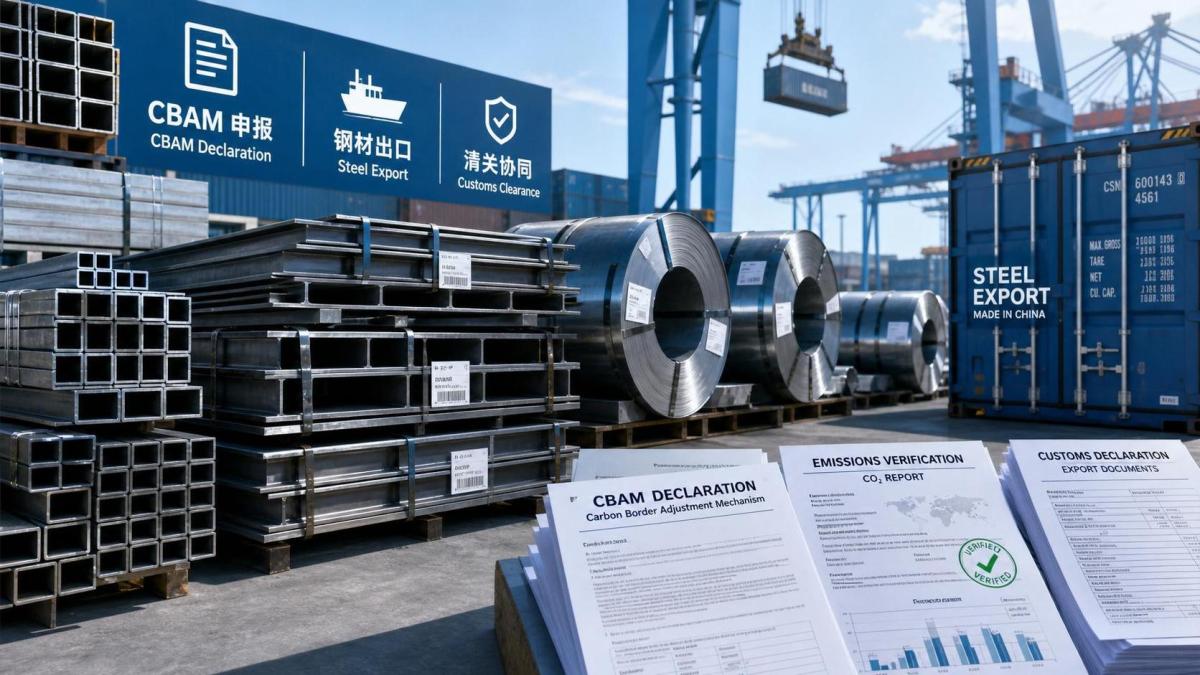
What Has Taken Effect From July 23
According to the information provided, from July 23, 2026, companies exporting steel and section products to the EU, including Chinese suppliers, must submit quarterly reports under the CBAM transition-period reporting requirement. The required submission includes embedded carbon emissions, production process parameters, and a third-party verification statement.
The same information indicates that the mechanism has a direct bearing on customs clearance compliance costs for buyers and on supplier access qualifications. Where reporting is not completed, goods may be delayed at port or refused.
Where The Immediate Pressure Appears In The Chain
Export transactions now carry a documentation threshold
For companies directly shipping steel and section products into the EU, the impact is tied to whether the required quarterly reporting package can be prepared in time and in the required form. The pressure is likely to show up first in export documentation, shipment planning, and the coordination needed between production data owners and trade teams.
EU-side buyers face a compliance and delivery risk question
For purchasers importing covered products into the EU, the issue is not limited to environmental reporting in principle. From an industry perspective, the practical concern is whether suppliers can support customs-facing compliance without disrupting clearance, delivery timing, or supplier eligibility. That makes supplier screening and document follow-up more relevant in ongoing procurement activity.
Manufacturing and processing suppliers are pulled into data disclosure
For processing and manufacturing enterprises in the steel supply chain, the requirement reaches beyond sales contracts into plant-level data readiness. Because embedded emissions and production process parameters must be reported, operational records and the ability to support third-party verification become part of export capability rather than a separate back-office matter.
Logistics and trade service providers may see more coordination demands
For customs brokers, freight coordinators, and other supply chain service providers, the mechanism may increase the need for document checks, timing control, and exception handling. Analysis shows that where reporting is incomplete, the commercial risk is not abstract: cargo delay or refusal directly affects execution at the shipment stage.
What Companies Should Watch Closely Now
Quarterly reporting readiness, not only policy awareness
What deserves closer attention is whether internal teams can actually assemble the required reporting elements on a quarterly cycle. Knowing that CBAM reporting is mandatory is different from having repeatable workflows for emissions data, process parameters, and verification documents.
Supplier qualification is becoming a live commercial issue
For buyers and traders, the supplier question is becoming more practical. The issue is not only price or capacity, but whether a supplier can provide compliant reporting materials in a reliable timeframe. This may affect supplier onboarding, renewal decisions, and order allocation.
Delivery planning should account for reporting gaps
Because incomplete reporting may lead to port delays or refusal, companies involved in delivery scheduling should treat reporting status as part of shipment readiness. Observably, this creates a distinction between policy compliance on paper and actual fulfillment risk in live orders.
Further rule language still needs continued verification
Although the provided information confirms the mandatory reporting stage and the required submission categories, companies should continue tracking any official wording, interpretive updates, or implementation details that affect documentation standards, reporting practice, and verification expectations.
Why This Reads As More Than A Formal Reporting Update
Analysis shows that this development is best understood as an operational tightening point rather than a symbolic compliance milestone. The confirmed facts already connect CBAM reporting to customs cost exposure, cargo handling outcomes, and supplier access. That means the market effect is likely to be felt first through trade execution and supplier management, even before companies draw broader strategic conclusions.
At the same time, it would be premature to extend this into claims not supported by the available information. It is more appropriate to understand this as a clear near-term compliance change with longer-term implications that still require continued observation.
How To Read The Current Signal
For the steel export trade linked to the EU market, this update marks a shift from watching CBAM to operating under it. The immediate significance lies in documentation, verification, clearance, and supplier eligibility. From an industry perspective, the most reasonable reading at this stage is that the change is already concrete in short-term trade operations, while its broader commercial consequences still need to be monitored through actual implementation.
Basis Of This Article And What Still Needs Checking
This article is based on the user-provided news title, event date, and event summary. For developments of this kind, commonly relevant source categories may include official announcements, company disclosures, industry association updates, authoritative media coverage, and standard-setting or regulatory documents.
A specific official source link was not provided in the input, so the exact underlying document and any later official clarification still need ongoing verification. Follow-up attention should remain on any formal updates that further define reporting practice, required evidence, and implementation at the shipment and customs stage.
By clicking 'Allow All', you agree to the storage of cookies on your device to enhance site navigation, analyze site usage and assist with our marketing efforts. Coo Cookie Notice