




On August 7, 2026, the U.S. Department of Commerce opened a new administrative review of the anti-dumping duty order covering Chinese hot-rolled steel plate and sections under HS 7208–7211. For exporters, importers, procurement teams, and supply chain operators tied to U.S.-bound shipments, the development matters because it is not just a procedural notice: it resets compliance expectations around transaction reporting, cost disclosure, related-party information, and near-term customs cost planning for goods shipped during the reviewed period.
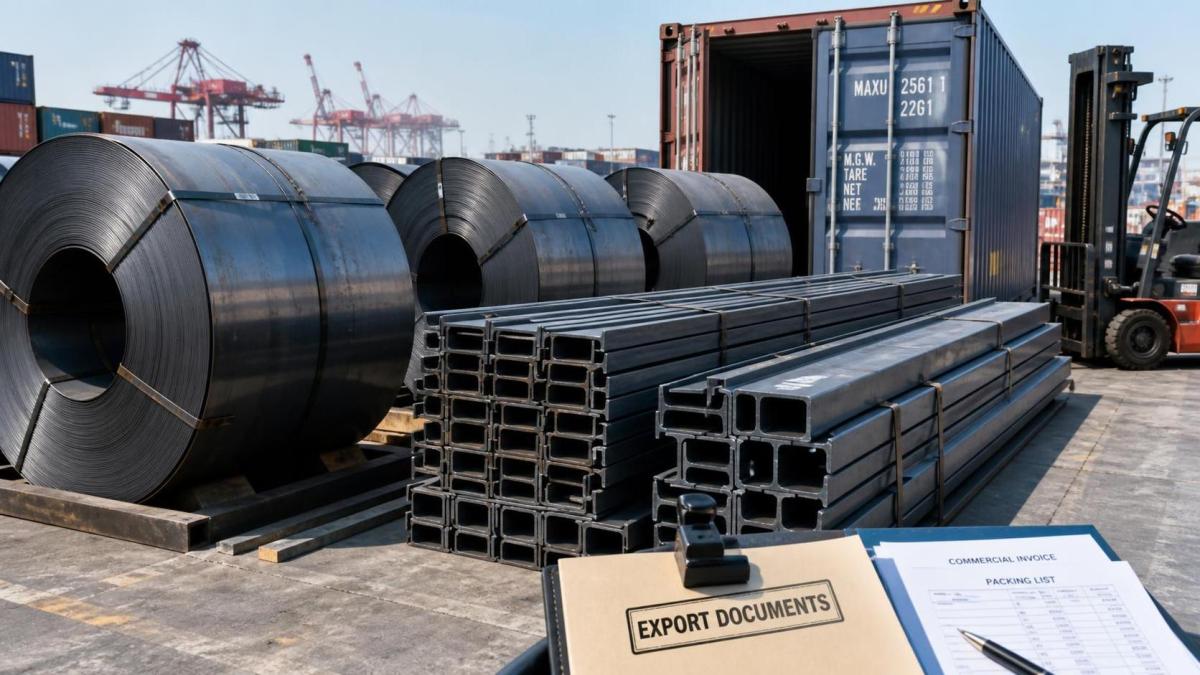
What the Review Now Covers
According to the announced information, the review is the fifth administrative review of the anti-dumping duty order on hot-rolled steel products from China. It applies to export shipments made between April 1, 2025 and March 31, 2026.
The review will reassess duty rates for certain companies. Exporters are required to submit complete information on export transactions, costs, and related parties.
Chinese suppliers exporting hot-rolled steel to the United States must complete response registration by September 21. If they do not, the nationwide rate of 32.4% will apply.
The announced action directly affects customs clearance costs for U.S. importers, compliance preparation in procurement, and supply chain stability.
Where the Pressure Will Be Felt First
Export documentation moves from routine filing to rate-sensitive evidence
From an industry perspective, Chinese exporters shipping the covered products to the U.S. are the first group affected because the review explicitly requires full transaction, cost, and related-party information. The practical impact is concentrated in document preparation, internal data consistency, and the ability to support declared commercial arrangements during the review process.
What deserves closer attention is whether export records, cost materials, and related-party disclosures are complete and aligned across sales, finance, and trade compliance functions. For affected suppliers, the registration deadline is not only procedural; it is directly linked to tariff treatment.
Import-side procurement faces renewed cost and timing uncertainty
U.S. importers and procurement teams may be affected because duty outcomes can change landed cost expectations and customs planning. Even without a final result yet, the review itself can alter how buyers assess supplier risk, shipment timing, and budget assumptions for covered steel products.
In practice, this means procurement and customs teams should pay attention to product scope under HS 7208–7211, supplier response status, and the completeness of compliance support documents tied to import entries. Clearance planning may become more sensitive where duty exposure is uncertain.
Supply chain service providers may see higher verification demands
Logistics coordinators, customs support teams, and other supply chain service providers may also feel the impact because clients are likely to require closer tracking of documentation, shipment periods, and product classifications connected to the review window.
Observably, the pressure here is less about transportation itself and more about record integrity across delivery, customs, and supporting trade files. Any mismatch between shipment records and review-related submissions could become commercially significant for affected parties.
What Companies Should Watch in the Near Term
Registration status and response readiness
Analysis shows the first near-term issue is whether covered Chinese exporters complete the required registration by September 21. For companies already active in the U.S. market, this is a concrete compliance checkpoint rather than a background legal development.
Consistency across transaction, cost, and related-party records
The announced requirements point directly to a deeper review of export transactions, production or sales cost information, and related-party disclosures. Companies involved in the covered trade flow should check whether commercial invoices, internal cost files, and party relationship records can support a consistent submission position.
Procurement and delivery planning under tariff uncertainty
For buyers and supply chain planners, the issue is not only tariff level but also how uncertainty affects ordering rhythm, customs budgeting, and delivery coordination. It is more appropriate to understand this as a current compliance and planning issue, not yet as a confirmed market outcome.
Scope control for covered products
The review applies to hot-rolled steel plate and sections under HS 7208–7211. Companies should therefore pay close attention to product scope, classification handling, and contract or shipment records tied to the reviewed period. Where internal product descriptions are unclear, the risk is less about broad policy interpretation and more about operational inconsistency.
Why This Reads as an Execution Signal
Analysis shows this development is best read as an active enforcement and administration signal rather than a purely symbolic policy update. The review has already been initiated, the covered period is defined, the information burden is explicit, and the consequence of non-registration is stated.
At the same time, it would be premature to treat the announcement as a final determination of future duty outcomes for all affected suppliers. Observably, the current stage still requires close attention to how companies respond, how documentation is assessed, and how market participants adjust procurement and clearance practices around the review.
How the Market Should Read the Current Stage
The immediate significance of this case lies in execution: covered exporters face a defined response deadline, importers face compliance and cost planning pressure, and supply chain participants face tighter documentation discipline. The development should therefore be understood as a rule-in-action event with direct operational implications, while the eventual commercial impact still depends on how the review process unfolds.
A balanced reading is that this is neither a routine headline nor a completed outcome. It is a live trade compliance event that requires attention now, especially for shipments, records, and procurement decisions connected to the covered products and review period.
Basis of This Article
This article is based on the user-provided news title, event date, and event summary. The summary states that the U.S. Department of Commerce launched the fifth administrative review of the anti-dumping duty order on Chinese hot-rolled steel products on August 7, 2026, covering exports from April 1, 2025 to March 31, 2026, requiring exporters to submit transaction, cost, and related-party information, and requiring response registration by September 21 to avoid application of the 32.4% nationwide rate.
For this type of development, commonly relevant source categories may include official government notices, trade or customs authority releases, industry association updates, standard-setting or compliance documents, and reporting by authoritative trade media. A specific official source link was not provided in the input, so the exact source document still requires follow-up verification.
Further observation is still needed on subsequent official wording, practical enforcement approach, procurement document changes, market feedback, and how affected companies implement their response and compliance preparations.
By clicking 'Allow All', you agree to the storage of cookies on your device to enhance site navigation, analyze site usage and assist with our marketing efforts. Coo Cookie Notice