




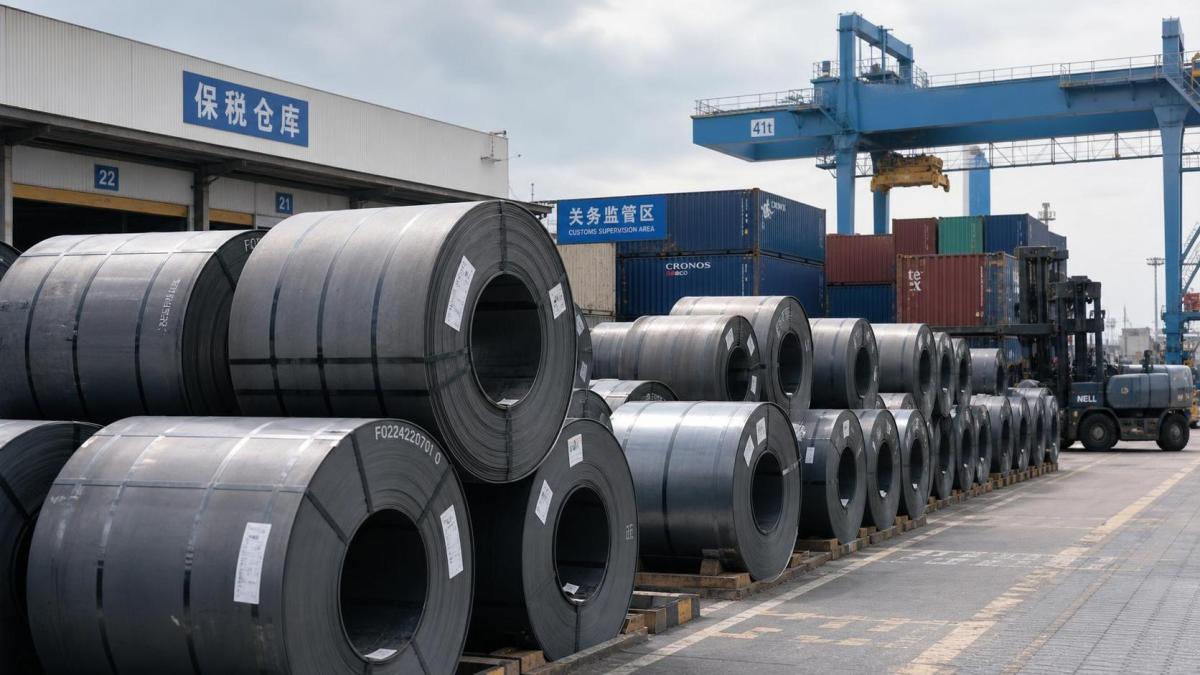
On July 3, 2026, the U.S. Department of Commerce announced an expedited sunset review covering antidumping and countervailing duty orders on hot-rolled coil (HRC) from China and indicated that the existing trade remedy orders will remain in place. For companies involved in HRC exports to the United States, downstream processing, overseas sourcing, customs handling, and distributor pricing, this is not just a procedural update. It directly affects compliance access, landed cost expectations, and transaction planning over the coming five years, particularly for buyers and secondary processors dealing with mainstream substrate grades such as ASTM A656 and ASTM A1011.
What the July 3 Notice Confirmed
The confirmed facts are limited but commercially significant. The U.S. Department of Commerce issued a notice on July 3, 2026, launching the first expedited sunset review of the antidumping and countervailing duty orders on hot-rolled coil originating in China. The review resulted in a decision to maintain the current AD/CVD orders. Based on the provided event summary, this outcome will directly affect compliance access for HRC exports to the U.S. market during the next five years, along with customs clearance costs and distributor pricing decisions. The scope of practical concern especially includes overseas purchasers and secondary processors sourcing common substrate materials under standards such as ASTM A656 and ASTM A1011.
Where the Commercial Pressure Is Likely to Appear First
Export transactions face continued entry and pricing constraints
From an industry perspective, exporters and direct trading companies are likely to feel the impact first because the continuation of AD/CVD orders keeps trade entry tied to an existing remedy framework rather than opening a lower-friction path into the U.S. market. The main effect is likely to appear in quotation models, shipment feasibility reviews, customs cost assumptions, and customer negotiations tied to U.S.-bound sales. What deserves closer attention is whether current documentation, product descriptions, and transaction records are aligned with the compliance expectations that normally accompany continued trade remedy enforcement.
Overseas buyers and processors may need to reassess sourcing economics
For overseas buyers and secondary processing businesses using HRC as a base material, the issue is less about headline policy language and more about whether sourcing from the current channel remains commercially workable under maintained duty exposure. Analysis shows that procurement planning, material substitution reviews, and contract pricing mechanisms may all come under renewed scrutiny. This is especially relevant where ASTM A656 or ASTM A1011 substrate is used for further fabrication, because procurement teams will need to compare not only product specifications but also the total import and delivery cost structure associated with compliance.
Distributors and circulation channels must watch margin pass-through
Channel distributors and stock-holding intermediaries may also face pressure, particularly where pricing commitments were built around assumptions of stable import cost treatment. Observably, the continuation of the existing orders can feed directly into resale pricing logic, inventory turnover planning, and downstream customer quoting. In practical terms, these businesses should pay attention to how customs-related costs, delivery terms, and product classification details are reflected in contracts and internal pricing controls.
Supply chain service providers may see stricter documentation demands
Logistics coordinators, customs service providers, and other supply chain support firms may be affected through the documentation side of execution. The event summary does not provide new operational rules, but continued AD/CVD treatment generally means that shipment files, technical descriptions, transaction paperwork, and traceability support remain commercially sensitive. It is more appropriate to understand this as a signal that execution discipline still matters across the clearance and delivery chain.
What Companies Should Watch Now
Review compliance files tied to product identity and use
Analysis shows that companies handling HRC shipments or procurement programs linked to the U.S. market should review whether technical files, specifications, product descriptions, and transaction records are internally consistent. This is particularly important for materials associated with ASTM A656 and ASTM A1011, where purchasing, sales, and customs descriptions should not drift apart across different documents.
Track official wording and any follow-on execution signals
Because the provided information confirms the launch of an expedited sunset review and the continuation of existing orders, but does not provide more detailed implementation language, companies should avoid assuming that every downstream execution point is already clarified. What deserves closer attention is any later official wording, enforcement interpretation, or procedural guidance that could affect customs treatment, compliance review thresholds, or contract risk allocation.
Recheck procurement cycles and delivery commitments
For procurement teams and processors, this development is a reason to revisit purchase timing, supplier qualification reviews, and delivery commitments for U.S.-linked business. This should not be read as proof of immediate disruption in every case. However, analysis shows that companies with longer lead-time transactions or fixed-price commitments may need a closer check on how duty-related cost exposure is addressed before orders move further into execution.
Prepare for tighter customer and tender documentation review
Where HRC is used as substrate for further processing or resale, buyers and project teams should pay attention to bid files, technical submissions, quality records, and post-delivery traceability materials. The current information does not establish new certification requirements, but it does suggest that documentation quality may become more commercially important where customers, distributors, or internal compliance teams reassess sourcing routes under maintained trade remedy conditions.
Why This Looks More Like an Execution Signal Than a New Opening
Observably, this development is better understood as a continuation signal rather than a market-liberalizing change. The core point is not that a new trade path has opened, but that the existing duty framework remains relevant for another planning cycle. From an industry perspective, that matters because many businesses make commercial decisions based not only on formal market access, but also on the predictability of landed cost, the defensibility of customs treatment, and the ease of supporting downstream pricing. At this stage, it is more appropriate to view the notice as an executed rule signal with continuing operational consequences, while still recognizing that the finer points of market response and implementation practice require further observation.
How This Update Is Best Understood for the Market
The July 3, 2026 notice matters because it keeps the existing AD/CVD framework in place for Chinese-origin HRC entering the U.S. market and therefore continues to shape compliance access, customs cost expectations, and pricing behavior across the supply chain. The most reasonable reading at present is neither to overstate it as a wholly new restriction nor to dismiss it as a routine formality. It is more appropriate to understand this as a confirmed trade-rule continuation with direct practical implications for exporters, buyers, processors, distributors, and supply chain operators that depend on HRC transactions connected to the U.S. market.
Basis of This Article and What Still Needs Verification
This article is generated based on the user-provided news title, event date, and event summary. For developments of this type, relevant source categories usually include official government notices, releases from regulatory or trade authorities, customs or trade administration information, industry association updates, standard-related documentation, and reporting from established business media. A specific official source link was not provided in the input, so the exact source document still needs to be verified on an ongoing basis. Continued attention should be given to any later policy detail, enforcement interpretation, procurement document changes, tender wording updates, market feedback, and company-level execution responses related to this review outcome.
By clicking 'Allow All', you agree to the storage of cookies on your device to enhance site navigation, analyze site usage and assist with our marketing efforts. Coo Cookie Notice